

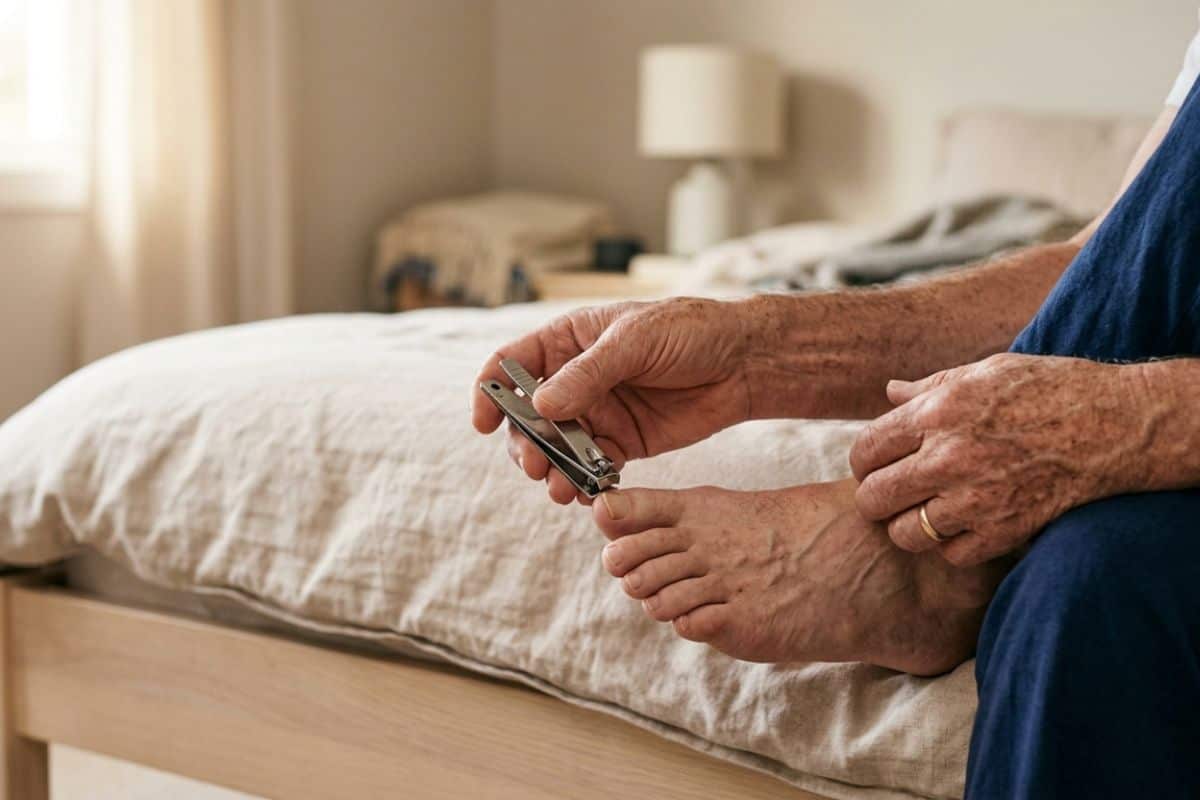
11 Jun Why Diabetics Should Not Cut Their Own Toenails: The Small Habit With Big Consequences
Understanding why diabetics should not cut their own toenails could be one of the most important pieces of health knowledge you ever save. It sounds dramatic for something as ordinary as a nail clipper, but ask any wound care specialist what starts many of the worst foot complications they treat, and the answer comes up again and again: a small nick from a home toenail trim.
For people living with diabetes in Muskogee, OK, and everywhere else, that tiny cut behaves nothing like it would on a healthy foot — and the chain of events it can trigger is the reason medical-grade nail care exists.
The Hidden Reason Why Diabetics Should Not Cut Their Own Toenails
Diabetes quietly changes three things about your feet, and each one turns nail trimming into a higher-stakes activity. First, peripheral neuropathy dulls or eliminates sensation. The National Institute of Diabetes and Digestive and Kidney Diseases reports that roughly half of all people with diabetes develop some form of nerve damage, most often in the feet. When you cannot fully feel your toes, you can clip skin along with nails and never notice. You can cut too deep at the corner and feel nothing. The injury announces itself days later, often as an infection already in progress.
Second, diabetes reduces circulation to the feet. Healing depends on blood delivering oxygen, nutrients, and immune cells to an injury, and narrowed vessels deliver less of all three. A nick that would close in two days on a healthy foot can stay open for weeks on a diabetic foot. The Centers for Disease Control and Prevention identifies this combination of numbness and slow healing as the core reason small foot injuries in diabetics escalate into ulcers.
Third, elevated blood sugar weakens the immune response and feeds bacteria. The warm, enclosed environment inside a shoe is already ideal for microbes; add a slow-healing cut and impaired immunity, and infection finds an open door.
The Physical Challenges Nobody Talks About
Even setting aside the medical risks, the mechanics of trimming your own toenails get harder with diabetes and with age. Reaching your feet requires flexibility that joint stiffness and body changes can take away. Diminished eyesight — common with long-term diabetes — makes it difficult to see exactly where the nail ends and skin begins.
Diabetic toenails also tend to thicken and harden, especially when fungal involvement develops, which forces people to squeeze clippers harder and slip more often. MedlinePlus advises people with diabetes, neuropathy, or circulation problems to have a healthcare provider manage their nail care rather than risk these injuries at home.
There is also the technique problem. Most people round their toenail corners, which encourages ingrown nails. An ingrown toenail on a diabetic foot is not a cosmetic annoyance — it is a wound waiting to happen, with the nail edge continuously pressing into vulnerable skin.
If you or a loved one with diabetes is still using home clippers, this is the moment to change that. Call Winds of Change and schedule professional, medical-grade nail care in Muskogee today.
What Medical-Grade Nail Care Looks Like
Professional diabetic nail care is a clinical service, not a pedicure. A trained specialist uses sterile instruments, trims nails straight across to the correct length, safely reduces thickened nails with medical tools, addresses early ingrown edges before they pierce skin, and inspects the entire foot for pressure points, skin breakdown, calluses, and early signs of trouble you may not feel.
The American Diabetes Association recommends regular professional foot exams precisely because trained eyes catch problems weeks or months before they become visible to patients themselves. In other words, a nail care appointment doubles as an early-warning screening. Many serious diabetic foot complications get caught for the first time during a routine professional trim.
The Real Cost of “Saving” a Trip
Skipping professional care feels economical until you count the downstream costs. The National Institutes of Health has long highlighted that diabetic foot ulcers precede the majority of diabetes-related lower-limb amputations, and a significant share of those ulcers begin with minor trauma — including nail-trimming injuries. Compare the price of routine nail visits against weeks of wound treatment, antibiotics, lost mobility, or hospitalization, and the math becomes obvious. Prevention is not an expensive option. It is a bargain.
Why Choose Winds of Change
Winds of Change was founded by Lynette Gunn, a Clinical Nurse Specialist with more than twenty years of experience in wound care and lower extremity health, including years at the Jack C. Montgomery VA Medical Center right here in Muskogee.
The practice specializes in non-surgical foot care with a prevention-first philosophy, which makes medical-grade diabetic nail care one of its core services — not an afterthought. Every nail appointment includes the kind of skilled inspection that catches neuropathy changes, circulation concerns, and early skin breakdown before they turn into wounds.
Lynette’s clinical outcomes have earned praise from board-certified surgeons, and patients travel from Muskogee, Fort Gibson, Tulsa, Broken Arrow, and Okmulgee for her focused, compassionate care. You will find the clinic at 2313 E Okmulgee St, Muskogee, OK 74403. A $25 consultation fee applies and gets credited toward your treatment package.
Conclusion
The nail clippers in your bathroom drawer are harmless to most people — but diabetes changes the rules. Numb feet hide injuries, poor circulation delays healing, and high blood sugar invites infection, which means one slip of the clippers can begin a months-long medical ordeal.
Professional nail care removes that risk entirely while adding regular expert inspection of your feet, and it is available without a long drive for residents of Muskogee, OK and surrounding communities. Protect your feet the smart way.
Contact Winds of Change to book your diabetic nail care appointment before a small cut becomes a big problem.
Frequently Asked Questions
How often should a diabetic have their toenails trimmed professionally?
Most people with diabetes benefit from professional nail care every six to ten weeks, depending on how quickly their nails grow and whether they have thickened nails, neuropathy, or circulation problems. A provider can recommend the right interval after an initial assessment.
Can a diabetic ever trim their own toenails safely?
Some people with well-controlled diabetes, normal sensation, good circulation, and good eyesight may trim carefully at home with their doctor’s approval. Anyone with neuropathy, poor circulation, thick nails, or vision problems should leave trimming to a professional.
What happens if a diabetic cuts their toe while trimming nails?
The cut should be washed gently, covered with a clean dressing, and monitored closely. Because diabetic wounds heal slowly and infect easily, any redness, swelling, drainage, or lack of improvement within a few days warrants prompt medical evaluation.
Why do diabetic toenails get so thick?
Reduced circulation, slower nail growth, repeated minor trauma, and fungal infections all contribute to thickening. Thick nails are harder to cut safely and can press into the nail bed, creating pressure injuries beneath the nail.
Are pedicure salons safe for diabetics?
Standard salons are generally not recommended. Shared instruments, foot baths, and aggressive cuticle or callus work all carry infection and injury risks. Medical nail care with sterile instruments is the safer choice for diabetic feet.
Sorry, the comment form is closed at this time.