

13 Apr Why Diabetics Need Medical Nail Care (Not a Pedicure)
Why people with diabetes need medical nail care is one of the most important health conversations that often gets overlooked until something goes seriously wrong. If you or someone you love is living with diabetes, understanding the difference between a routine pedicure and medically appropriate nail care could literally be the difference between a relaxing afternoon and a life-altering complication.
At Winds of Change in Muskogee, OK, we see firsthand what happens when diabetic patients prioritize their nail health and what happens when they don’t. This guide is designed to give you everything you need to make the right decision for your feet, your health, and your life.
The Hidden Danger Living at the End of Your Toes
Most people think of nail care as cosmetic. A nice trim, maybe some polish, a relaxing foot soak — what could go wrong? For people without diabetes, the answer is: not much. For those living with diabetes, however, the answer is far more serious than most realize.
Diabetes affects the body in multiple ways that directly impact foot and nail health:
- Peripheral neuropathy — nerve damage that reduces or eliminates sensation in the feet, meaning cuts, punctures, and infections can go completely unnoticed
- Poor circulation — reduced blood flow to the extremities slows healing dramatically, turning a minor nick into an open wound that refuses to close.
- Compromised immune response — high blood sugar impairs the body’s natural ability to fight infections, allowing bacteria and fungi to take hold quickly.
- Thin, fragile skin — diabetic skin is more susceptible to tears, cracks, and breakdown, especially around the nails
Put these four factors together, and you begin to understand why something as seemingly simple as cutting your toenails requires a level of care that a standard nail salon cannot provide.
Why people with diabetes need medical nail care: A Clinical Perspective
The phrase “Why diabetics need medical nail care” isn’t a marketing slogan — it reflects a documented medical reality. According to podiatric health guidelines, people with diabetes are at dramatically elevated risk of lower extremity complications. In fact, diabetic foot problems are one of the leading causes of non-traumatic lower limb amputations in the United States.
Here is how a routine nail salon visit can become a serious health event for a diabetic patient:
- A nail technician cuts a nail too short, nicking the surrounding skin
- The patient, due to neuropathy, feels nothing during the appointment
- Within 24-48 hours, bacteria enter through the tiny wound
- Poor circulation means the immune system cannot respond effectively
- The infection deepens into the surrounding tissue
- What began as an invisible nick becomes cellulitis, then a deep tissue infection, then a potential surgical emergency
This is not a rare or exaggerated scenario. It is a well-documented pattern that healthcare providers see repeatedly. The heartbreaking part? It is entirely preventable.
What Makes Medical Nail Care Different
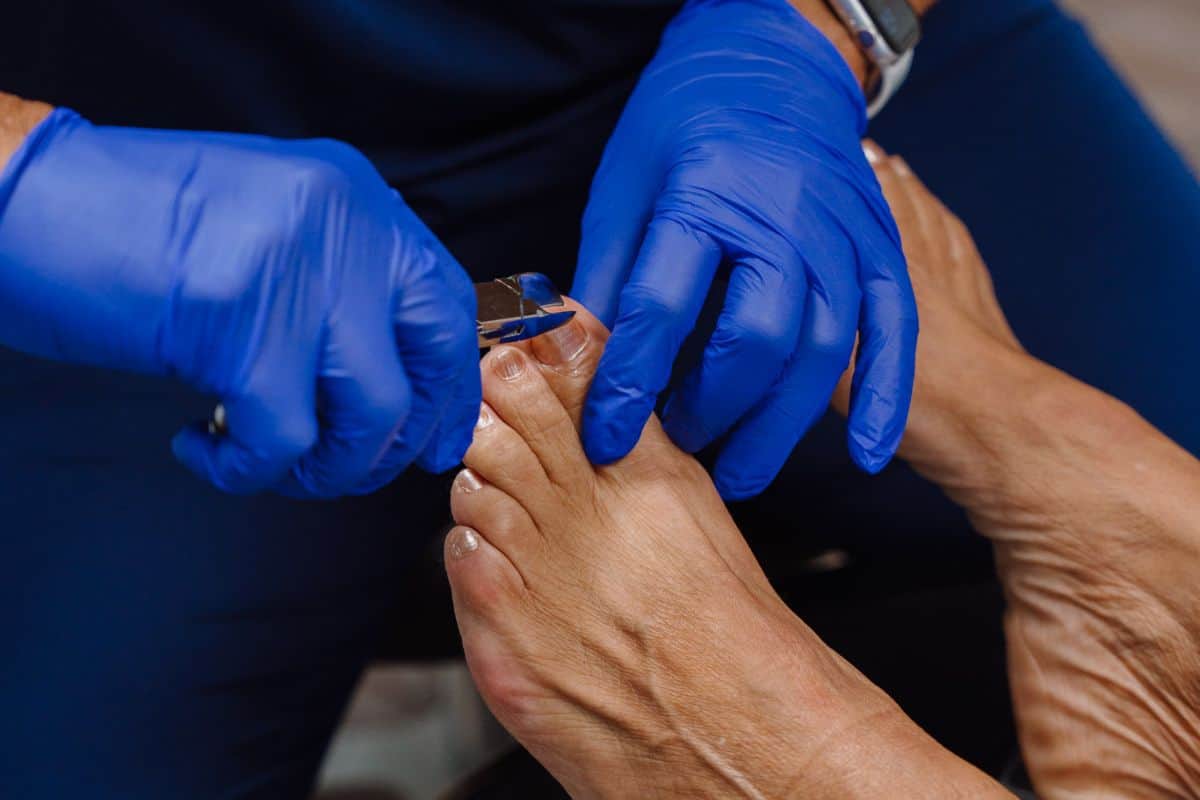
Medical nail care is not simply a pedicure performed by someone wearing scrubs. It is a clinically informed service that considers the patient’s overall health picture. Here is what sets it apart:
- Sterile instruments and technique — Every tool used in a medical nail care session is properly sterilized to eliminate the risk of cross-contamination or introducing bacteria into broken skin. Nail salons, even clean and reputable ones, operate under beauty industry standards, not medical ones.
- Trained clinical assessment — A qualified medical nail care provider doesn’t just look at your nails. They assess circulation, skin integrity, signs of infection, nail thickening or fungal involvement, pressure points, and callus buildup — all of which have clinical significance for diabetic patients.
- Proper cutting technique — Diabetic nails are cut straight across, never too short, and never into the corners where ingrown nails develop. This is non-negotiable. An ingrown nail in a person with diabetes is not an inconvenience — it is a potential pathway to hospitalization.
- No foot soaks or chemical treatments — Standard pedicures involve prolonged soaking of the feet, which softens and weakens the skin, increasing vulnerability to tears and microbial invasion. Medical nail care avoids this entirely.
- Documentation and follow-up — Medical providers track changes in your feet over time. Thickening nails, color changes, new calluses, shifts in skin temperature — these are all clinical data points that help identify problems early.
The Anatomy of a Diabetic Foot Problem
Understanding why diabetic feet are so vulnerable requires a look at what is actually happening inside the body.
When blood sugar remains elevated over time, it damages the small blood vessels and nerves throughout the body. In the feet — the furthest point from the heart — this damage accumulates most severely. Sensory nerves that would normally alert you to pain, heat, or injury stop functioning properly. Autonomic nerves that control sweating and skin moisture fail, leaving the skin dry and prone to cracking. Motor nerves that help maintain the shape of the foot weaken, sometimes leading to structural deformities like hammertoes or Charcot foot.
Meanwhile, the circulatory system is under its own strain. Arteries stiffen and narrow, reducing blood flow to the legs and feet. Less blood flow means less oxygen delivery, slower healing, and a weakened local immune response.
The nails themselves are affected, too. Diabetic patients frequently develop:
- Onychomycosis (fungal nail infection), which causes thick, discolored, brittle nails
- Onychauxis (nail thickening), which makes nails difficult to cut without proper tools
- Subungual hematomas (bruising under the nail from pressure), which can mask deeper injuries
- Ingrown toenails, particularly in the big toe
Each of these conditions, manageable nuisances for a healthy person, becomes a serious threat in the context of diabetes.
Contact Winds of Change in Muskogee, OK, today to schedule your medical nail care appointment. Your feet will thank you and so will your peace of mind.
Why a Regular Pedicure Cannot Substitute for Medical Nail Care
Nail salon professionals are trained in aesthetics. They are skilled at making nails look beautiful, but they are not trained to manage clinical risk in medically complex patients. This is not a criticism — it is simply a matter of scope and training.
Here is a direct comparison of what each setting provides:
Standard pedicure salon:
- Cosmetic-grade tools that may not be fully sterilized between clients
- No clinical assessment of foot or nail health
- Foot soaking protocols that weaken diabetic skin
- No documentation or follow-up system
- Staff not trained to recognize signs of infection, ischemia, or neuropathy
- No liability framework for medical outcomes
Medical nail care at Winds of Change:
- Clinically sterilized instruments following healthcare-grade protocols
- Full foot and nail health assessment with every visit
- Techniques adapted specifically for diabetic and compromised patients
- Documentation of changes over time for early intervention
- Staff trained to recognize warning signs and escalate appropriately
- Services designed for patient safety first, aesthetics second
The difference is not about luxury or price. It is about whether the person caring for your feet is equipped to keep you safe.
Signs That Your Diabetic Feet Need Immediate Attention
Even with regular medical nail care, diabetic patients must stay vigilant between appointments. Seek care immediately if you notice any of the following:
- Any open wound, sore, or blister on the foot that is not healing within a few days
- Redness, warmth, or swelling around a nail or on any part of the foot
- Discharge or odor from a nail or surrounding skin
- A nail that has become embedded in the surrounding tissue
- Any change in skin color, particularly darkening or a bluish tinge
- Pain that is new or unusual — or, crucially, an area that should be painful but is not
- Nail thickening, yellowing, or crumbling that has gotten worse
These are not situations to monitor at home. They require prompt professional attention.
Building a Diabetic Foot Care Routine
Medical nail care is one critical piece of a larger foot care routine that every diabetic patient should follow:
- Daily inspection — Use a mirror or ask someone to help you check the bottoms of your feet every single day. Look for cuts, cracks, blisters, redness, or any changes in color or texture.
- Daily washing and moisturizing — Wash feet gently with lukewarm water (never hot) and mild soap. Dry thoroughly, especially between the toes. Apply moisturizer to the tops and bottoms of the feet — but not between the toes, where excess moisture encourages fungal growth.
- Proper footwear — Never walk barefoot, even indoors. Wear properly fitted, supportive shoes with cushioning. Check inside shoes before putting them on every time.
- Regular medical nail care — Depending on how quickly your nails grow and the extent of any nail pathology, medical nail care every 6 to 10 weeks is appropriate for most diabetic patients.
- Blood sugar management — Ultimately, the best protection for your feet is keeping your blood glucose levels well controlled. Good glycemic management slows the progression of neuropathy and improves circulation.
Why Choose Winds of Change
At Winds of Change in Muskogee, OK, we are dedicated to providing medically sound nail care for patients who need more than a standard pedicure can offer. Our approach is rooted in clinical awareness, patient safety, and genuine compassion for every individual who walks through our doors.
Here is what sets us apart:
- We understand the specific risks that diabetes, poor circulation, and neuropathy create for foot and nail health
- We use properly sterilized tools and clinically informed techniques on every single visit
- We take the time to assess your full foot health picture, not just trim what’s visible
- We document changes over time so that nothing slips through the cracks
- We treat you as a whole person, not just a pair of feet
- We are proud to serve the Muskogee, OK community with the level of care our neighbors deserve
Your feet carry you through your life. They deserve care that matches the complexity of your health.
The Cost of Waiting
One of the most common reasons people delay switching to medical nail care is the perception that it is an unnecessary expense. The reality is the opposite. A single hospitalization for a diabetic foot infection costs thousands of dollars and weeks of recovery. A surgical intervention costs far more — not just financially, but in terms of quality of life and independence.
Medical nail care is preventive care. It is far less expensive, far less painful, and far more effective to prevent a diabetic foot complication than to treat one after the fact. Think of it not as a luxury, but as part of your diabetes management — as essential as your medication, your glucose monitoring, and your dietary habits.
Conclusion
Diabetes is a complex condition that touches nearly every system in the body and your feet are among the most vulnerable points. The difference between medical nail care and a standard pedicure is not cosmetic. It is clinical. It is a matter of safety, prevention, and long-term health outcomes.
If you have diabetes, peripheral neuropathy, poor circulation, or any other condition that compromises foot health, please do not trust your nail care to a setting that is not equipped to handle your needs. Seek out qualified medical nail care providers who understand what is at stake.
At Winds of Change in Muskogee, OK, we are here for exactly that purpose. We are not just a nail care service. We are a health partner committed to keeping you on your feet, active, and living the life you deserve.
Call us today to learn about our diabetic nail care services and let us be part of your healthcare team. Because you deserve foot care that is as serious about your health as you are.
Frequently Asked Questions
1. How often should a diabetic person get medical nail care?
Most diabetic patients benefit from medical nail care every 6 to 10 weeks. However, the exact frequency depends on how quickly nails grow and whether there are existing nail conditions such as fungal infection or thickening. Your provider can recommend a schedule tailored to your needs.
2. Can I go to a regular nail salon if my diabetes is well-controlled?
Even well-controlled diabetes carries an elevated risk for foot complications. The issue is not only blood sugar levels but the potential for nerve damage and circulatory changes that may have developed over time without obvious symptoms. Medical nail care is the safer choice regardless of how well-managed your condition is.
3. What should I bring to a medical nail care appointment?
It is helpful to bring a list of your current medications, any recent lab results related to your diabetes management, and a note of any symptoms you have noticed in your feet or lower legs. Wear or bring the shoes you wear most often so your provider can assess fit and pressure points.
4. Is medical nail care covered by insurance?
Coverage varies depending on your insurance plan and the specific services provided. Some plans cover therapeutic nail care for diabetic patients when it is documented as medically necessary. It is worth contacting your insurance provider directly to ask about coverage for diabetic foot care services.
5. What if I notice a problem between appointments?
Do not wait until your next scheduled visit. If you notice any redness, swelling, discharge, pain, open wounds, or any unusual changes to your feet or nails, contact your healthcare provider or a qualified foot care professional immediately. Early intervention is always the safest course of action.
Sorry, the comment form is closed at this time.