

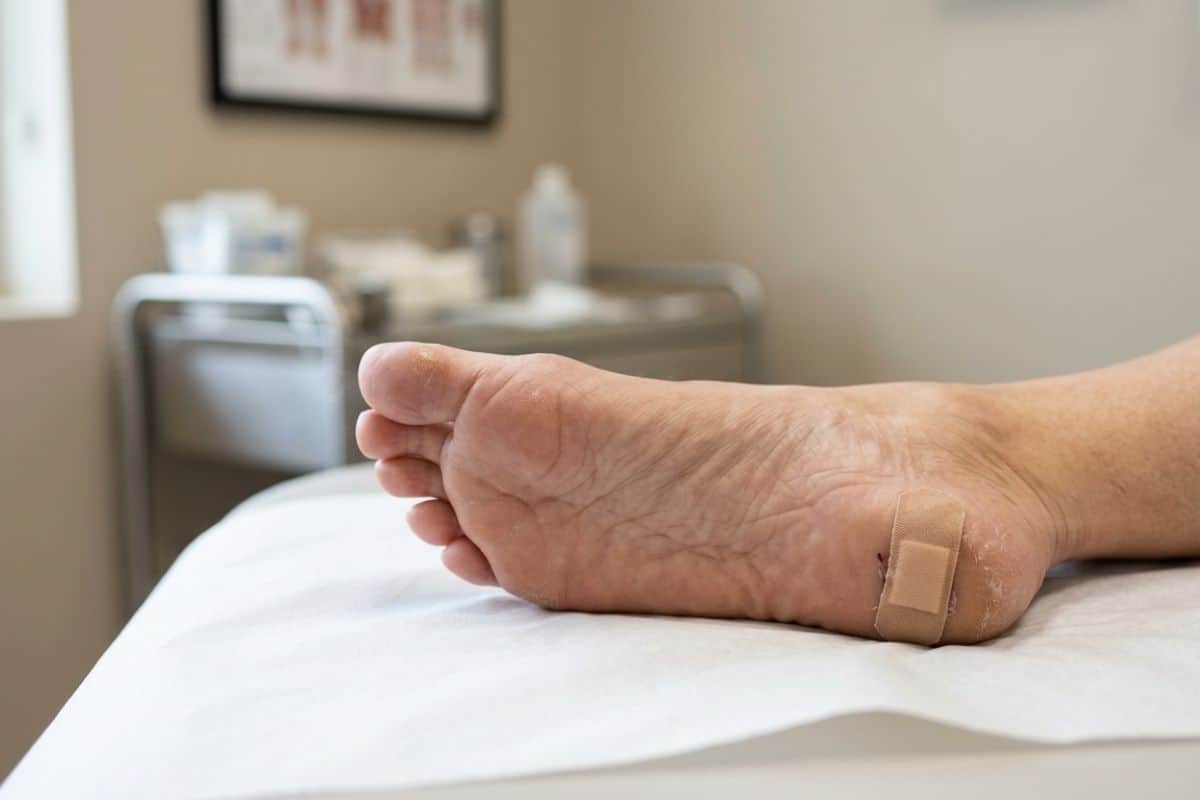
10 Jun When to See a Wound Care Specialist for a Foot Sore: A Guide That Could Save Your Foot
Knowing when to see a wound care specialist for a foot sore can mean the difference between a quick recovery and a complication that changes your life. Most people treat a sore on the foot like any other scrape — clean it, cover it, and wait.
But your feet operate under unique pressure, both literally and medically. They carry your full body weight thousands of steps a day, they sit far from your heart where circulation is weakest, and they live inside warm, dark shoes where bacteria thrive.
When a foot sore lingers, your body is sending you a message that something deeper is interfering with healing. Here in Muskogee, OK, we see this story unfold every week, and the patients with the best outcomes share one thing in common: they sought specialized care early.
The Two-Week Rule Every Patient Should Know
A healthy foot sore should show clear, visible improvement within two weeks. The edges should shrink, redness should fade, and new pink tissue should fill the wound bed. If your sore looks the same — or worse — after fourteen days, it has crossed the line from a simple injury into a non-healing wound, and the underlying cause needs professional investigation. According to the National Institute of Diabetes and Digestive and Kidney Diseases, poor circulation and nerve damage are two of the most common hidden reasons wounds stall, and neither one is visible to the naked eye.
The two-week rule is a maximum, not a target. Several warning signs mean you should not wait even that long. Spreading redness, warmth around the wound, swelling, foul odor, drainage that turns yellow or green, dark or black tissue at the edges, red streaks moving up the leg, or fever are all signals of infection that demand same-week evaluation. The Centers for Disease Control and Prevention notes that foot wounds are a leading cause of hospitalization for people with diabetes, and most of those hospitalizations begin with a sore that looked “minor” at first.
Why Foot Sores Behave Differently Than Other Wounds
The skin on your foot heals against the odds. Every step compresses the tissue, reopens fragile new cells, and pushes fluid into the wound area. If you also live with diabetes, peripheral artery disease, neuropathy, or venous insufficiency, your healing capacity drops even further. MedlinePlus explains that conditions affecting blood flow and nerve sensation can allow a small foot injury to deepen silently, because the body neither delivers enough oxygen to repair the tissue nor enough sensation to warn you it is worsening.
This is exactly why a wound care specialist approaches a foot sore differently than a general clinic. Instead of simply cleaning and bandaging the surface, a specialist evaluates the entire system behind the wound: circulation, sensation, pressure points, footwear, blood sugar control, and infection risk. The wound is the symptom. The specialist treats the cause.
Ready to have your foot sore evaluated by a specialist who treats wounds all day, every day? Call Winds of Change to schedule your assessment today.
What a Wound Care Specialist Actually Does
At a dedicated wound care practice, your visit begins with a comprehensive assessment that measures the wound, evaluates the surrounding tissue, and screens for circulation and nerve problems. From there, treatment may include professional debridement to remove dead tissue that blocks healing, advanced dressings matched to your wound’s moisture and drainage level, offloading strategies that remove pressure from the sore, and a monitoring schedule that catches setbacks before they become emergencies. The American Heart Association emphasizes that identifying circulation problems early protects more than your foot — it protects your heart and your life.
Specialized care also means education. You will learn how to inspect your feet daily, how to dress the wound at home, what shoes protect your healing tissue, and which changes mean you should call immediately. Healing happens between appointments, and a good specialist equips you for those days.
When Waiting Becomes Dangerous
Time is tissue. Research highlighted by the National Institutes of Health consistently shows that the longer a foot wound remains open, the higher the risk of infection reaching bone, and bone infections dramatically raise the risk of amputation. The patients who avoid these outcomes are not lucky — they are early. If you have diabetes, any break in the skin of your foot deserves professional eyes within days, not weeks. If you have noticed numbness, tingling, or cold feet alongside your sore, those symptoms move your situation into the urgent category.
Why Choose Winds of Change
Winds of Change is not a general clinic that occasionally sees wounds — wound care is the entire mission. Founded by Lynette Gunn, a Clinical Nurse Specialist with more than two decades of experience, including years providing expert wound care at the Jack C. Montgomery VA Medical Center in Muskogee, the practice is built on evidence-based protocols and a prevention-first philosophy.
Lynette’s clinical outcomes have earned the trust of board-certified surgeons, and her approach is entirely non-surgical, focused on keeping patients on their feet and out of the operating room. Located at 2313 E Okmulgee St in Muskogee, OK, Winds of Change serves patients from Muskogee, Fort Gibson, Tulsa, Broken Arrow, and Okmulgee with the kind of focused, dignified, relationship-driven care that turns worried patients into healed ones. A $25 consultation fee applies and is credited toward your treatment package.
Conclusion
A foot sore that refuses to heal is never “just a sore.” It is your body asking for help, and the sooner you answer, the simpler the solution. Use the two-week rule as your absolute limit, treat infection signs as same-week emergencies, and remember that conditions like diabetes shorten every timeline. Expert, non-surgical wound care is available right here in Muskogee, OK — you do not have to drive to Tulsa, and you do not have to wait until the problem becomes a crisis.
Don’t gamble with your mobility. Contact Winds of Change today and take the first step toward complete healing.
Frequently Asked Questions
How long should a foot sore take to heal?
A minor foot sore in a healthy person typically heals within one to three weeks. If a sore shows no improvement after two weeks, an underlying issue such as poor circulation, infection, or nerve damage may be slowing the process and a professional evaluation is recommended.
What does an infected foot sore look like?
Common signs include spreading redness, warmth, swelling, increasing pain, yellow or green drainage, foul odor, and red streaks extending from the wound. Fever or chills alongside these signs indicates the infection may be spreading and requires prompt medical attention.
Can I treat a foot ulcer at home?
Basic care like gentle cleaning and clean dressings helps minor wounds, but true ulcers usually involve deeper tissue and underlying causes that home care cannot address. Ulcers that go untreated professionally carry a significant risk of infection and worsening.
Do I need a referral to see a wound care specialist?
In most cases, no. Many wound care practices accept patients directly without a physician referral, though some insurance plans may have their own requirements, so checking your coverage beforehand is wise.
Why won’t my foot wound heal even though I keep it clean?
Cleanliness alone cannot overcome problems like restricted blood flow, uncontrolled blood sugar, repeated pressure from walking, or dead tissue in the wound bed. These root causes must be identified and treated for the wound to close.
Sorry, the comment form is closed at this time.