

30 Mar Medical-Grade Nail Care for Diabetic Patients: Safe, Specialized & Preventive
Medical-grade nail care for diabetic patients is not a luxury — it is a critical piece of health management that far too many people overlook until a small problem becomes a serious one.
For the millions of Americans living with diabetes, the feet are one of the most vulnerable parts of the body, and the nails are often the first place where hidden dangers quietly develop.
At Winds of Change in Muskogee, OK, we understand this deeply and have built our nail care services around the unique and urgent needs of individuals with diabetes.
If you or someone you love is managing diabetes, this guide is one you will want to keep. Read every word. Share it with your doctor. Bookmark it. Because what you learn here could genuinely protect a limb and possibly a life.
Why Diabetic Patients Cannot Afford to Ignore Nail Health
Diabetes changes the body in ways that make ordinary nail issues extraordinary risks. Two of the most significant complications are peripheral neuropathy and poor circulation, both of which directly affect the feet and nails.
Peripheral neuropathy is nerve damage that reduces or eliminates sensation in the feet. A person with neuropathy may have a nail digging into the skin, a cut from improper trimming, or a fungal infection spreading beneath the nail, and feel absolutely nothing. By the time pain or discomfort signals a problem, that problem may have already advanced significantly.
Poor circulation, or peripheral artery disease, means that blood flow to the feet is restricted. The body’s natural healing process depends on a steady supply of oxygen-rich blood. When circulation is compromised, even a minor injury to the nail or surrounding skin heals slowly, if at all. This opens a dangerous window for bacteria and infection to take hold.
Together, these two complications create a situation in which a common nail problem — an ingrown nail, a thickened nail, a small cut from trimming can escalate into a wound, then an ulcer, and finally a serious infection. According to data from the American Diabetes Association, lower-extremity complications account for more hospitalizations among diabetic patients than any other complication of the disease. Proper, professional nail care is a direct line of defense against this outcome.
What Makes Nail Care “Medical-Grade”?
Not all nail care is equal. A standard pedicure at a conventional salon delivers cosmetic results. While it may feel relaxing and look beautiful, it lacks the training, tools, techniques, and environment to serve someone with diabetes safely.
Medical-grade nail care sets a different standard altogether. It describes nail care performed by trained professionals with clinical precision, using sterilized instruments, with a clear understanding of diabetic foot physiology, the risks involved, and the protocols necessary to prevent harm.
Here is what separates medical-grade nail care from a standard pedicure:
- Technicians sterilize instruments between every client using clinical-grade disinfection protocols, eliminating the risk of cross-contamination and fungal or bacterial transfer.
- Technicians trim nails straight across at safe lengths, never rounding the edges, reducing the risk of ingrown nails.
- Technicians handle cuticles gently and conservatively — aggressive cutting, common in conventional salons, creates open pathways for infection in people who cannot heal quickly.
- Trained professionals carefully inspect the skin surrounding the nail for early signs of breakdown, discoloration, cracking, or infection — issues that a patient with neuropathy may never notice on their own.
- Technicians carefully control and test water temperature before any soaking, because diabetic patients with neuropathy cannot accurately sense extreme temperatures and can sustain burns without realizing it.
- Technicians address calluses and thickened skin gently and conservatively — aggressive removal can cause micro-tears that become serious wounds.
- Professionals treat every cut as a serious event requiring attention rather than a minor inconvenience, and never use sharp implements carelessly.
The entire process builds on the foundation of “first, do no harm” — the same principle that guides medical care at every level.
Medical-Grade Nail Care for Diabetic Patients: What the Appointment Looks Like
Understanding what a medical-grade nail care appointment actually involves can help patients feel confident and prepared. At Winds of Change, we take a structured, thorough approach to every visit.
The appointment begins with a brief health check-in. We ask about any changes in sensation, any new areas of concern, any recent injuries, or skin changes on the feet or lower legs. This is not small talk — it is important clinical information that shapes how we approach your care that day.
Next, we conduct a visual inspection of the entire foot, including the nails, nail beds, surrounding skin, and between the toes. We are looking for signs of fungal infection (thickened, discolored, or crumbly nails), ingrown nails, calluses under pressure, cracks in the skin, and any areas of redness or swelling that could suggest inflammation or early infection.
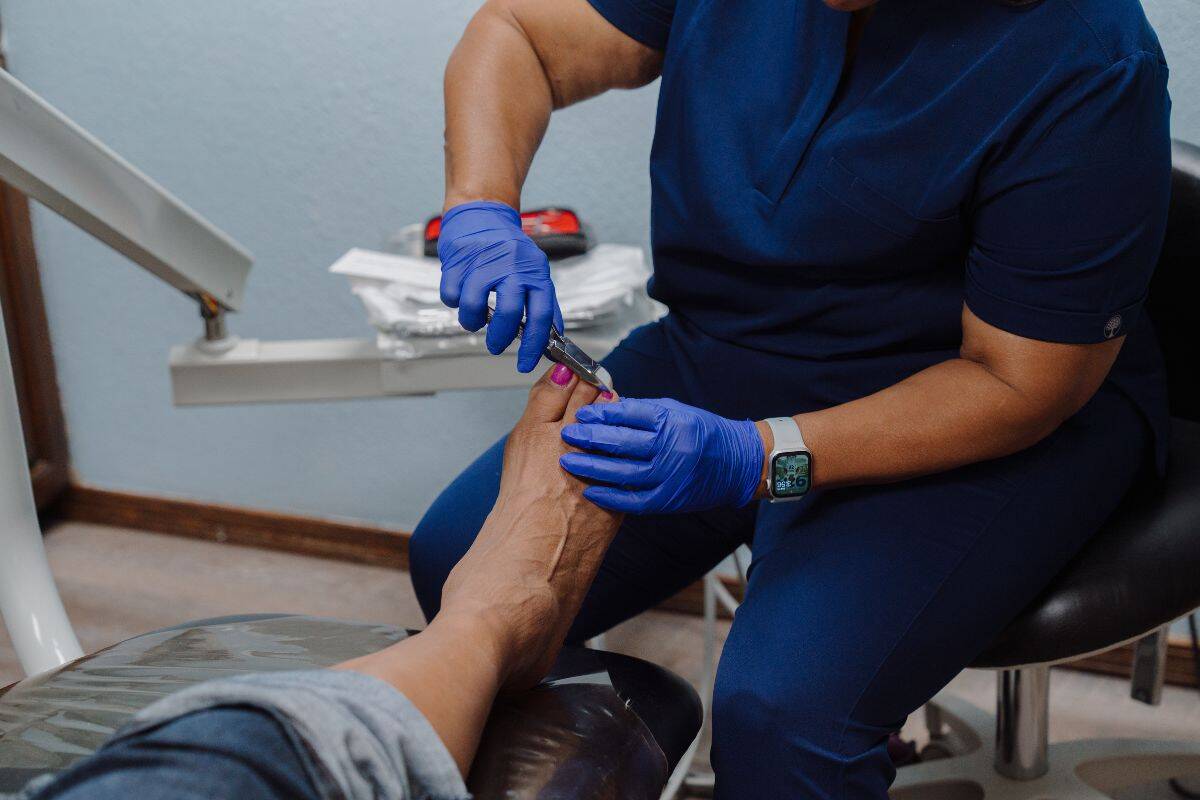
Nail trimming follows, performed with sterile, professional instruments. We trim nails straight across to a safe and appropriate length, never cutting into the corners. We do not apply pressure to the nail bed. Every movement is deliberate.
Any nail thickening is gently addressed using appropriate filing techniques. Thickened nails are common in diabetic patients and can become painful or hide infections beneath the nail plate. We work carefully to reduce thickness in a safe and comfortable way.
Finally, we apply appropriate moisturizers to the feet and lower legs, with particular attention to avoiding the spaces between the toes, where moisture can accumulate and promote fungal growth. We provide guidance on at-home care, what to watch for between visits, and when to schedule your next appointment.
The Preventive Power of Routine Nail Care
One of the most important things we want diabetic patients to understand is that professional nail care is preventive medicine. It is not something you do when there is a problem — it is something you do so that problems never develop in the first place.
Routine professional appointments allow a trained eye to monitor your nail and foot health over time. We build a picture of what is normal for you, which means we are far more likely to catch changes early. An early-stage fungal infection caught at an appointment is a manageable inconvenience. The same infection, left untreated for months, can penetrate the nail bed, spread to the surrounding skin, and, in compromised immune systems, lead to far more serious consequences.
Routine care also keeps nails at safe lengths, reducing the chance of trauma, pressure, and ingrown nails. It keeps the surrounding skin moisturized and intact, which is the body’s first line of defense against pathogens. And it creates a regular point of professional contact — a consistent opportunity for someone trained in diabetic foot health to simply look and make sure things are okay.
Think of it the way you think of your regular dental checkups. You do not wait until you have a toothache to see a dentist. The same logic applies here. Regular, professional nail care is an investment in your long-term health that pays compounding returns over time.
Contact Winds of Change in Muskogee, OK, today and schedule your diabetic nail care appointment. Our team is here for you, and we would be honored to be part of your health team.
At-Home Care: What to Do Between Appointments
Professional care is essential, but what happens between appointments matters too. Here are the most important things diabetic patients should practice at home to keep their feet and nails healthy between visits to Winds of Change:
- Inspect your feet every single day. Use a hand mirror to check the soles, heels, and between the toes. Look for redness, swelling, cuts, blisters, or any change in skin color. If your vision makes this difficult, ask a trusted family member to help.
- Wash your feet daily in lukewarm water. Always test the water temperature with your elbow or a thermometer before putting your feet in. Dry carefully and thoroughly, especially between the toes.
- Moisturize daily with a fragrance-free lotion or cream approved for diabetic skin. Apply to the tops and bottoms of your feet, but avoid the spaces between your toes.
- Wear clean, dry, seamless socks every day. Seams inside socks can create friction and pressure points that lead to sores. Diabetic-specific socks with moisture-wicking properties are an excellent investment.
- Never walk barefoot, even inside your home. A small cut or puncture you cannot feel is a serious risk. Proper footwear protects your feet at all times.
- Do not attempt to trim your own nails with clipper angles that cut into the corners, and never use sharp instruments between the toes or on thickened nails. Leave detailed nail work to your professional care provider.
- Report any changes immediately. If you notice a new sore, a change in nail color, bleeding around the nail, warmth or swelling in the foot, or anything that looks unusual, contact your healthcare provider and let us know at your next visit.
Why Choose Winds of Change
At Winds of Change in Muskogee, OK, we are not just a nail care service. Our team approaches every client with the care, precision, and respect that good health demands. The decision to focus on medically-informed nail care came from seeing a real gap — too many people with diabetes were either avoiding nail care altogether out of fear, or they were receiving care in environments that were not equipped to keep them safe.
When you come to Winds of Change, you are seen as a whole person, not a set of nails. Your health history, current concerns, and goals are always our starting point. Open communication about what is observed and recommended is central to every appointment. The highest standards of hygiene and sterilization are maintained so that every visit is safe.
Ongoing education is also a priority — staying current on best practices in diabetic foot care ensures the best possible service for every client.
Proudly serving the Muskogee, OK community, our work is driven by genuine dedication. Our clients are our neighbors, our friends, and our family members.
Keeping them healthy is not just our job — it is our calling. Whether you are newly diagnosed with diabetes or have been managing it for decades, skilled, compassionate, medically-informed nail care you can trust is what you will always find here.
Conclusion
Living with diabetes requires vigilance, and that vigilance extends to the tips of your toes. Medical-grade nail care is not optional for diabetic patients — it is a meaningful health practice that reduces risk, prevents complications, and gives trained professionals a regular window to catch problems before they escalate.
The feet are remarkable. They carry us through every moment of our lives, and they deserve care that matches their importance. For people with diabetes, that care must be specialized, safe, and consistent.
At Winds of Change in Muskogee, OK, we are proud to provide exactly that. Our team is trained, our environment is safe, our techniques are built around your specific needs, and our commitment to your health is unwavering. We invite you to experience the difference that truly specialized nail care can make — not just in how your feet look, but in how confidently and comfortably you live your life.
Schedule your appointment with Winds of Change today for medical-grade nail care for diabetic patients. Your health is worth it, and we are here to help you protect it.
Frequently Asked Questions
1. How often should a diabetic patient have professional nail care?
Most healthcare providers and foot care specialists recommend that diabetic patients receive professional nail care every six to eight weeks. However, if you have particularly fast-growing nails, thickened nails, a history of ingrown nails, or active circulation issues, your provider may recommend more frequent visits. At Winds of Change, we work with each client to establish a schedule that fits their individual health picture.
2. Is it safe for someone with diabetes to get a pedicure?
A conventional salon pedicure can pose risks for diabetic patients — including unsanitary tools, aggressive nail and cuticle cutting, overly hot water, and staff who are not trained in diabetic foot health. Medical-grade nail care, like the services offered at Winds of Change in Muskogee, OK, is specifically designed to be safe for diabetic patients. If you are considering nail care anywhere, ask about their sterilization protocols, training in diabetic care, and how they handle the unique risks your health presents.
3. What should I bring to my first appointment at Winds of Change?
Bring any information relevant to your diabetes management — your current medications, any notes from your podiatrist or primary care provider if you have them, and a list of any specific concerns you have about your feet or nails. Wear or bring comfortable, closed-toe shoes and clean socks. Most importantly, bring your questions. We love an informed client.
4. Can nail care help prevent diabetic foot ulcers?
Yes, absolutely. Many diabetic foot ulcers originate from small, undetected injuries or irritations — an ingrown nail, a minor cut from improper trimming, a pressure point from a callus. Regular professional nail care reduces these risks by keeping nails properly trimmed, keeping skin moisturized and intact, and providing consistent professional monitoring. It is one of the most practical and accessible preventive steps a diabetic patient can take.
5. What if I notice something unusual on my foot between appointments?
Do not wait for your next scheduled appointment. Contact your primary care provider or podiatrist immediately if you notice any new open sores, unexplained swelling, changes in skin color (especially darkening or redness), warmth in a specific area, or any wound that is not healing. You are also welcome to call Winds of Change — we can advise you on whether you need to be seen sooner and coordinate with your healthcare team as needed. When in doubt, act quickly. In diabetic foot health, early intervention is everything.
Sorry, the comment form is closed at this time.