

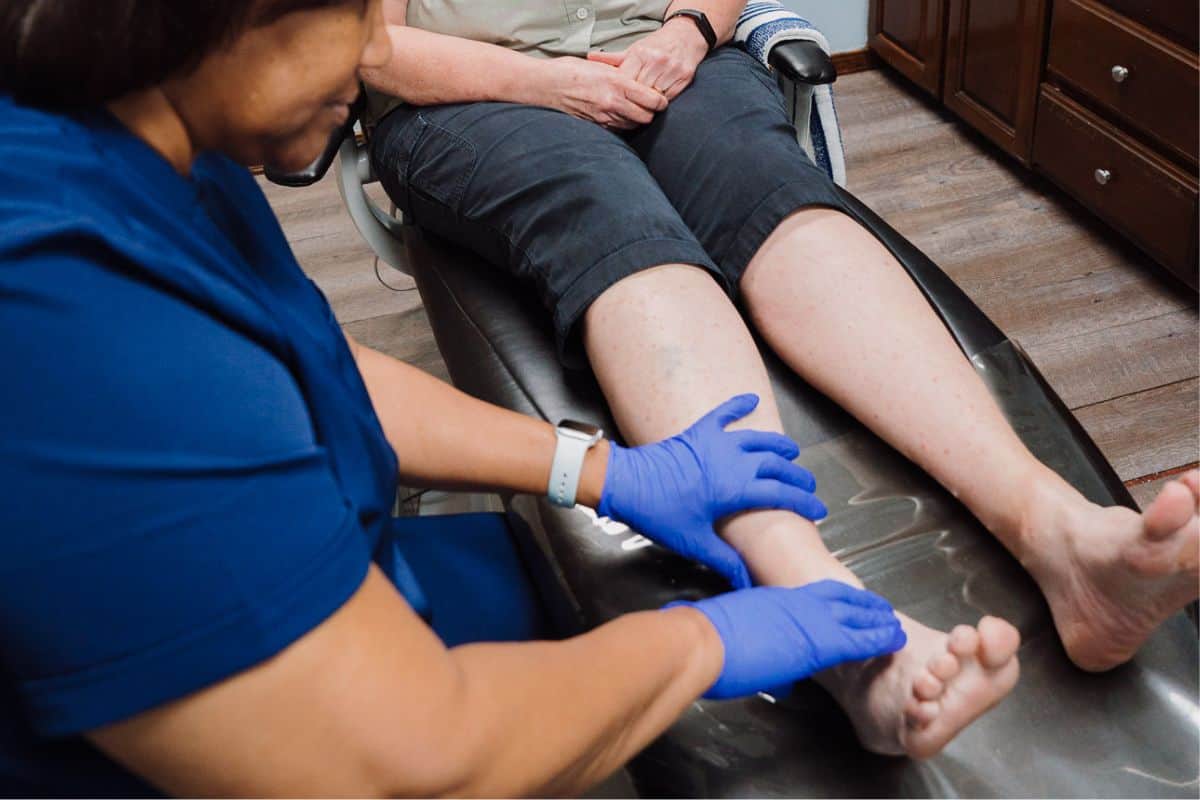
01 Apr Can Diabetic Foot Wounds Heal Without Surgery? Yes — Here’s How
Can diabetic foot wounds heal without surgery? Absolutely — and thousands of patients every year avoid the operating room by accessing expert, advanced wound care at the right time.
At Winds of Change in Muskogee, OK, we see this transformation every single day. If you or someone you love is living with a diabetic foot wound, this article will walk you through everything you need to know to heal safely, effectively, and without going under the knife.
Key Statistics:
- 40M+ Americans are living with diabetes
- 25% of people with diabetes will develop a foot ulcer in their lifetime
- 85% of diabetes-related amputations begin with a foot wound
These numbers are sobering but they are also preventable. The path between a foot wound and a life-altering amputation is not inevitable. It is navigated by the decisions made in the weeks and months between discovery and treatment. The sooner you act, the more options you have and the more likely those options will not involve a surgical suite.
Why Diabetic Foot Wounds Are Different From Ordinary Wounds
Not all wounds are created equal. A cut on a healthy person’s hand heals in days. The same type of wound on the foot of a person with diabetes can linger for months or never fully close on its own.
This happens for three interconnected reasons:
- Peripheral Neuropathy: High blood sugar damages the nerves in your feet, reducing or eliminating your ability to feel pain. Wounds often go unnoticed until they are already deep and infected.
- Poor Circulation (Peripheral Artery Disease): Diabetes narrows blood vessels, limiting the flow of oxygen-rich blood to the extremities. Healing requires blood flow. Without it, tissue cannot repair itself.
- Compromised Immune Response: Elevated glucose impairs the white blood cells your body depends on to fight infection, making diabetic wounds prime targets for bacteria.
Understanding these factors is not about discouragement — it is about recognizing why standard wound care is often not enough, and why specialized wound care makes all the difference.
If your wound is red, warm, swollen, draining pus, or has an odor — or if you have a fever — seek professional care the same day. Diabetic foot infections can progress rapidly within 24–48 hours.
Can Diabetic Foot Wounds Heal Without Surgery? The Answer Lies in These 7 Evidence-Based Treatments
Surgery is sometimes necessary — but it is far from the first step. Modern wound care has made extraordinary advances, and when therapies are applied early by a skilled clinical team, patients routinely achieve full wound closure without surgical intervention. Here is what a comprehensive, non-surgical treatment plan includes:
- Wound Debridement: The careful removal of dead or infected tissue creates a clean wound bed where healthy cells can thrive — performed right in a clinical setting, no operating room required.
- Advanced Wound Dressings: Modern dressings maintain ideal moisture balance, protect against bacteria, absorb drainage, and promote tissue regeneration — far beyond simple gauze.
- Offloading and Pressure Relief: Every step on an open wound disrupts healing. Total contact casting, specialized footwear, and custom orthotics redistribute pressure, allowing tissue to repair itself.
- Infection Control and Topical Antimicrobials: Your specialist monitors bacterial load and uses topical antimicrobial agents or oral antibiotics to prevent infection from spreading.
- Blood Sugar Management: Tight glucose control — coordinated with your primary care or endocrinology team — directly improves healing speed and quality. It is not optional; it is foundational.
- Hyperbaric Oxygen Therapy (HBOT): Breathing pure oxygen in a pressurized chamber drives oxygen into tissues starved by poor circulation, significantly accelerating healing in resistant wounds.
- Bioengineered Skin Substitutes and Growth Factors: Lab-grown skin grafts and topical growth factors jumpstart healing at the cellular level when wounds remain stubborn.
Don’t wait — your wound won’t heal itself. Every day without proper care is a day your wound can deepen or become infected. The expert team at Winds of Change in Muskogee, OK, is ready to build your personalized healing plan — starting today.
The Warning Signs You Should Never Ignore
Living with diabetes requires daily foot vigilance. Many patients discover their wound has progressed far beyond what they expected because neuropathy prevented them from feeling pain. Here are the signs you must inspect every single day:
- Any open sore, blister, or break in the skin on the foot or ankle, no matter how small it appears.
- Red skin, darkened, or has changed color around a wound or callus, which may indicate tissue damage below the surface.
- Swelling, warmth, or tenderness in the foot, even in the absence of a visible wound — these can signal internal infection.
- Unusual odor or discharge from any area of the foot is a hallmark of bacterial infection that demands immediate attention.
- A wound that has not improved in 2 weeks with home care — this is the threshold at which professional intervention becomes essential.
If any of these apply to you right now, please do not wait. Reach out to our team at Winds of Change in Muskogee, OK, and let us help you take control of your healing before the wound takes control of your life.
What Your Daily Foot Care Routine Should Look Like
Professional wound care is indispensable — but what you do between appointments matters just as much. Here is a daily protocol every diabetic patient should follow:
- Inspect both feet every morning and evening using a mirror or asking a loved one for help. Look between toes, at the heels, and along the entire sole.
- Wash your feet gently with warm (not hot) water and mild soap, then pat completely dry — especially between the toes where moisture breeds fungal and bacterial growth.
- Apply a fragrance-free moisturizer to the top and bottom of your feet, but avoid the spaces between your toes to prevent cracking and create entry points for bacteria.
- Never walk barefoot, even inside your home. Wear well-fitting, seamless, protective footwear at all times to prevent injury to insensate feet.
- Check your blood sugar daily and report any significant fluctuations to your care team, as glucose control is directly tied to wound healing speed.
Why Choose Winds of Change
At Winds of Change in Muskogee, OK, we are a dedicated healing partner. We understand that behind every wound is a person: someone with a life to live, a family to be present for, and a future worth protecting.
Here is what sets us apart from standard care options in the region:
- Specialized Expertise: Our clinical team focuses exclusively on advanced wound care, bringing a depth of knowledge and skill that general practitioners cannot replicate. We stay current with the latest evidence-based therapies and bring them directly to our patients in Muskogee.
- Personalized Treatment Plans: No two wounds are alike. We conduct thorough assessments — including vascular, neurological, and wound-specific evaluations — to create a care plan tailored to your wound, your body, and your life.
- Compassionate, Patient-First Approach: We know that living with a chronic wound affects more than just your foot — it affects your confidence, your independence, and your emotional well-being. Our team treats the whole person, not just the wound.
- Coordination with Your Entire Care Team: We work closely with your primary care physician, endocrinologist, and vascular specialists to ensure every aspect of your health is supporting your wound healing journey.
- Commitment to Avoiding Amputation: Limb preservation is not just a clinical goal at Winds of Change — it is a core mission. We exhaust every non-surgical option before discussing any more invasive options, because we believe your legs are worth fighting for.
Located in the heart of Muskogee, we are proud to serve patients from across the region who deserve world-class wound care close to home.
Conclusion
A diabetic foot wound does not have to mean a surgical outcome. With the right care delivered early, consistently, and by a team that truly specializes in wound healing the vast majority of diabetic foot wounds can close completely without any surgical procedure.
The keys are awareness, action, and the right partner. Know the warning signs. Inspect your feet daily. Control your blood sugar. And when a wound appears or refuses to heal do not leave it to chance or time. Seek specialized wound care immediately.
At Winds of Change in Muskogee, OK, healing is not just what we do; it is who we are. It is who we are. We invite you to experience the difference that expert, compassionate, and personalized wound care can make in your life. Your journey back to full health starts with a single step — let us take that step together.
Stop managing your wound day to day and start truly healing. Wondering can diabetic foot wounds heal without surgery? Our expert wound care team in Muskogee, OK, will assess your wound, explain your options clearly, and begin treatment the same day whenever possible
Frequently Asked Questions
Q1: Can diabetic foot wounds really heal without surgery?
Yes — in many cases, absolutely. When caught early and treated with advanced wound care therapies such as debridement, offloading, specialized dressings, infection control, and hyperbaric oxygen therapy, diabetic foot wounds can achieve full closure without any surgical procedure. Early intervention is the single most important factor in avoiding surgery.
Q2: How long does a diabetic foot wound take to heal?
Healing timelines vary based on the wound’s size, depth, location, the patient’s blood sugar levels, and overall circulation. Minor wounds treated promptly may close in a matter of weeks. More complex or long-standing ulcers may take several months of consistent care. The key is that healing is actively happening throughout, which requires staying engaged with your wound care team.
Q3: What happens if I ignore a diabetic foot wound?
Untreated diabetic foot wounds deteriorate quickly and silently. Without proper care, they can deepen into the muscle and bone, become severely infected, develop gangrene, and ultimately require partial or full amputation of the foot or limb. The statistics on diabetes-related amputations are sobering — but almost all of them begin with a wound that was not treated soon enough.
Q4: What is the most effective treatment for a diabetic foot ulcer?
There is no single “best” treatment — the most effective approach is a personalized, multi-layered plan developed by a wound care specialist. This plan typically includes blood sugar control, wound debridement, pressure offloading, advanced dressings, infection management, and, in resistant cases, therapies like hyperbaric oxygen or bioengineered tissue. The right combination depends entirely on your specific wound and health status.
Q5: Does Winds of Change treat diabetic foot wounds in Muskogee, OK?
Yes! Winds of Change, located right here in Muskogee, OK, specializes in advanced non-surgical wound care for patients with diabetes and related conditions. Our team provides comprehensive assessments, personalized treatment plans, and ongoing support to help your wound heal as safely and quickly as possible — without surgery whenever achievable. Contact us today to schedule your consultation.
Sorry, the comment form is closed at this time.