

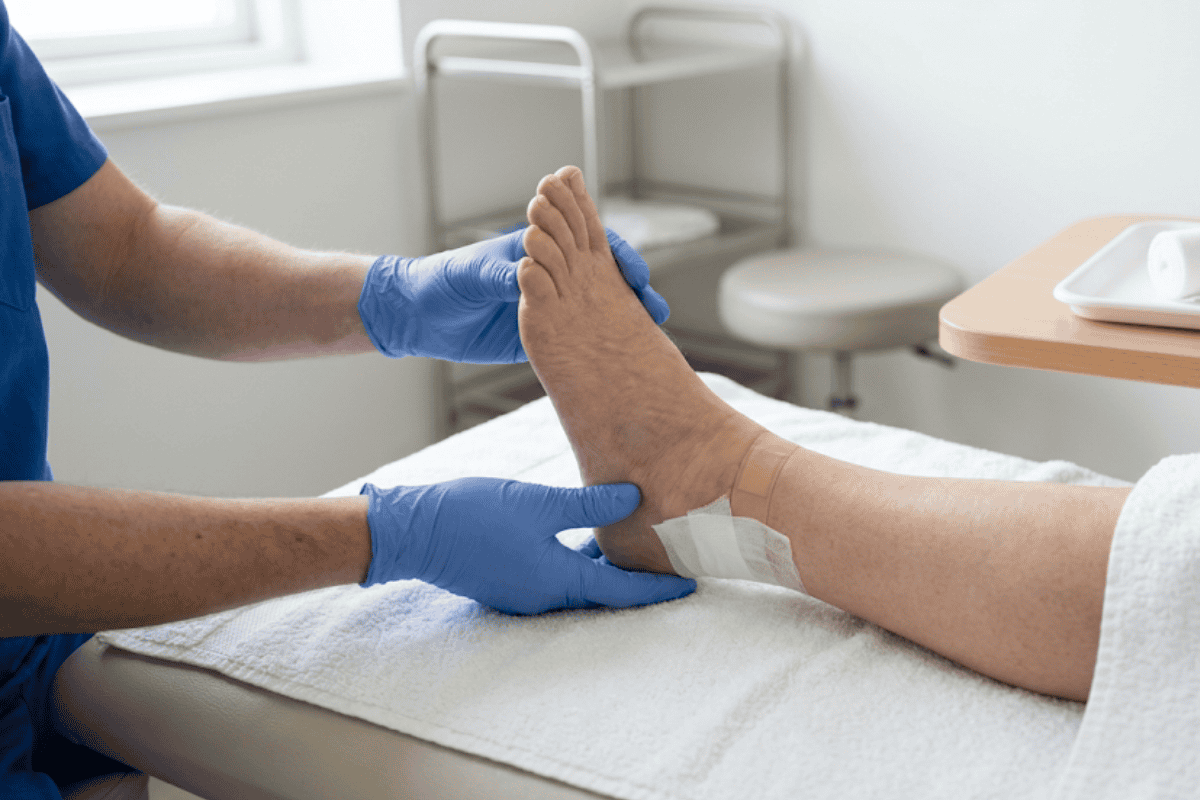
15 Oct Diabetic Wound Care in Oklahoma: Non-Surgical Options
About 40.1 million people in the United States, 12.0% of the population, had diabetes in 2023, according to CDC estimates. Each of those people lives with a risk that a small foot sore can turn into a wound that will not close. Diabetic wound care in Oklahoma starts with knowing which sores are urgent, what non-surgical treatment involves, and who can follow a wound from the first assessment through healing. This guide, written for readers in Muskogee, OK and the surrounding communities, covers all three.
Why Diabetes Makes Foot Wounds Harder to Heal
Diabetes changes two things that a healing wound depends on: feeling and circulation. The CDC reports that nerve damage affects about half of all people with diabetes. When the nerves in the feet stop sending clear signals, a blister, a pebble in a shoe, or a thin cut can go unnoticed for days. The skin keeps taking pressure on the injured spot, and a minor problem becomes an open sore.
Reduced blood flow adds a second problem. Healing tissue needs a steady supply of oxygen and nutrients, and narrowed vessels in the legs and feet slow that delivery. Elevated blood glucose can also make infection harder for the body to fight. The result is a wound that sits open for weeks, which gives bacteria more time to settle in.
The NIDDK explains that diabetic neuropathy typically affects the feet and legs, and that symptoms range from pain to numbness. That is why a person with diabetes can have a serious wound and feel almost nothing. Looking at your feet is not optional, because pain is an unreliable alarm.
Warning Signs That Deserve a Call
Some changes are easy to dismiss and expensive to ignore. The table below lists the warning signs that federal health agencies name, what each one can mean, and when to pick up the phone.
| Wound warning sign | What it can mean | When to call |
|---|---|---|
| A cut, blister, or bruise that does not start to heal after a few days | An early ulcer or a wound that is stalled | Call once a few days have passed with no progress |
| Skin that becomes red, warm, or painful | A possible infection | Seek care promptly, the same day if possible |
| A callus with dried blood inside | A wound forming underneath the callus | Call to schedule an assessment, and do not cut it yourself |
| Loss of the ability to feel heat or cold, or tingling and burning | Nerve damage that hides injuries | Call to schedule, and check your feet daily until seen |
| An infection that turns black and smelly | A sign of possible gangrene | Seek emergency care immediately |
The NIDDK foot problems guidance tells people to contact a health care provider right away for a cut, blister, or bruise that does not start to heal after a few days. The same page names skin that becomes red, warm, or painful as signs of a possible infection, and a callus with dried blood inside as another reason to call. It also lists an infection that turns black and smelly as a sign of possible gangrene, which needs emergency care.
Loss of the ability to feel heat or cold, along with tingling and burning, points to nerve damage. Nothing on that list should wait for your next routine appointment. Prompt attention to infection matters most, because an infected wound can worsen quickly.
How Non-Surgical Diabetic Wound Care in Oklahoma Works
Surgery is sometimes necessary, but many diabetic wounds are managed without it, especially when they are caught early. Non-surgical wound care is a sequence of steps that build on each other, and skipping any step weakens the rest. If you want a closer look at whether foot wounds can heal without an operation, our earlier article walks through the details.
The first step is a thorough assessment. A clinician looks at the wound’s size, depth, and surrounding skin, checks for signs of infection, and asks about circulation, sensation, and medical history. This baseline matters because every later decision is compared against it.
The second step is protecting the wound from the pressure and friction that caused it. A sore on the sole will not close if the person keeps walking on it the same way. Footwear changes, padding, and activity adjustments take pressure off the spot so tissue can rebuild.
The third step is keeping the wound clean and appropriately dressed so the surface stays healthy. The fourth is watching for infection at every visit, since an infection changes the plan entirely. The fifth is supporting the body’s own repair through blood glucose management with your own health care team. The NIDDK notes that managing blood glucose, taking medicines, and living healthily can help prevent or delay diabetes problems, and healing wounds are no exception. Medication questions belong with your prescriber, not a blog post.
No honest provider can promise that a given wound will heal. Healing depends on circulation, infection, glucose control, and how consistently the plan is followed. What good care can promise is a structured process and prompt recognition when a wound needs a different level of treatment.
Ready to have a wound looked at? Contact Winds of Change in Muskogee to book a wound care consultation.
A Daily Routine That Protects Healing Skin

Home habits decide whether clinic visits succeed. These five steps take about five minutes a day:
- Inspect both feet every day, including the soles and between the toes, using a mirror or a family member’s help.
- Wash your feet with lukewarm water and dry them fully, especially between the toes.
- Wear clean socks and shoes that fit, and never walk barefoot, even indoors.
- Leave calluses, corns, and ingrown nails to a clinician instead of cutting them yourself.
- Report any change from the warning signs above the day you notice it.
Daily checks work because wounds that are found early are smaller, shallower, and easier to manage. A person with numb feet cannot rely on discomfort to flag a problem, so the eyes have to do the job.
Why Choose Winds of Change
Winds of Change is built around one idea: a single wound care clinician should manage a diabetic wound from the first assessment through healing, using evidence-based, non-surgical protocols. That continuity matters for diabetic wounds in Oklahoma because a wound changes week to week, and the person who saw it last week is best placed to notice what is different today. Nothing gets lost between handoffs.
That clinician is Lynette Gunn, APRN, CNS, who founded the practice. She has about 20 years of specialized wound care experience, including over 18 years in wound and foot care at the Eastern Oklahoma VA, the Jack C. Montgomery VA Medical Center in Muskogee. That work included wound care for surgical patients, so she knows what happens when a wound does not respond to non-surgical care and what a surgical team looks for.
The practice focuses on non-surgical foot and lower leg care. Its services include chronic wound care using evidence-based protocols, neuropathy and venous care, medical nail care, and gentle callus care, where the patient is awake and comfort comes first. After a wound heals, the Foot and Leg Wellness Program provides ongoing maintenance to help keep feet healthy.
The office is at 2313 East Okmulgee Street, Muskogee, OK 74403, open Tuesday, Wednesday, and Thursday from 8:00 AM to 4:00 PM. Patients come from Muskogee, Fort Gibson, Tulsa, Broken Arrow, and Okmulgee. Winds of Change is a self-pay practice and does not accept insurance, so ask about this when you call (918) 351-1336.
Conclusion
Diabetic wound care in Oklahoma works best when problems are caught early and handled in a clear order: assess, relieve pressure, keep the wound clean, watch for infection, and support healing from the inside. Daily foot checks and a fast phone call at the first warning sign give a wound the best chance. If a sore has not started to heal after a few days, or any sign in the table above appears, book an appointment rather than waiting. Seek urgent care for spreading redness, warmth, pain, or a black, foul-smelling infection.
Ready to start? Contact Winds of Change to schedule a consultation for your diabetic wound.
Frequently Asked Questions
What is the best treatment for diabetic foot ulcers?
No single treatment works for every ulcer. Care usually combines taking pressure off the area, removing unhealthy tissue, controlling infection, and managing blood glucose. A clinician chooses the mix based on the wound’s depth, blood flow, and signs of infection.
How are diabetic foot ulcers treated?
Treatment typically starts with an assessment of the wound and the circulation and sensation in the foot. Pressure is relieved with footwear changes or padding, unhealthy tissue is cleaned away by a clinician, and the wound is dressed. Infections are treated promptly under medical direction.
Can a diabetic wound heal without surgery?
Many diabetic wounds can heal with non-surgical care, especially when treated early. Deep infections, poor blood flow, or damaged bone may require a surgical opinion. A clinician can tell which situation applies after examining the wound.
What happens if a diabetic wound does not heal?
A wound that stays open gives bacteria a way into deeper tissue. An infection that does not respond to treatment can spread and, in severe cases, may lead to amputation. Seeing a clinician when a sore has not improved after a few days lowers that risk.
What is the best wound care for a necrotic diabetic foot ulcer?
Necrotic means the tissue has died, often appearing black or dark. This is not a wound to treat at home, because dead tissue invites infection. It needs prompt evaluation by a clinician who can assess blood flow and decide how to remove the tissue safely.
Sorry, the comment form is closed at this time.