

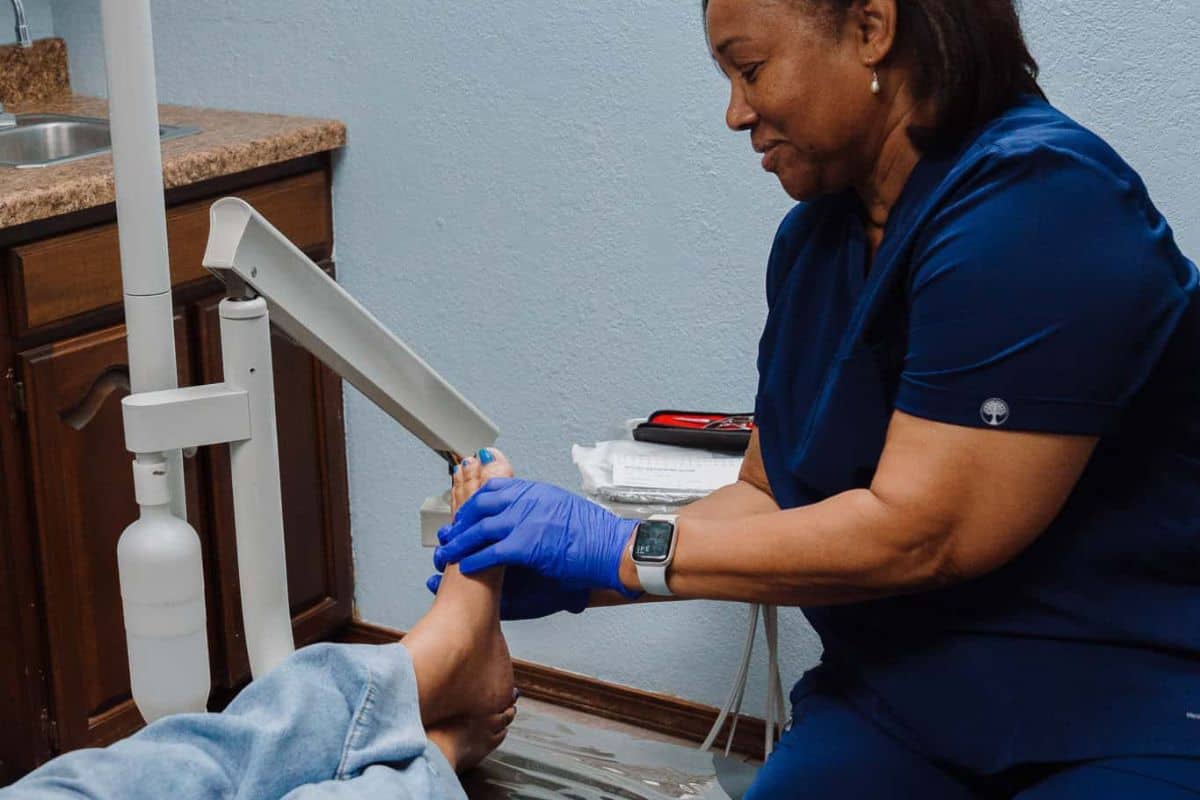
25 Mar Diabetic Foot Care Clinic in Muskogee, OK: Wounds, Nails & Neuropathy
If you or someone you love is living with diabetes in eastern Oklahoma, finding a trusted diabetic foot care clinic in Muskogee, OK, is one of the most important healthcare decisions you will ever make.
Diabetes does not simply affect blood sugar — it silently wages war on your feet, your nerves, and your quality of life, often before you ever notice a single warning sign. At Winds of Change in Muskogee, OK, we have built a specialized foot care practice around one guiding belief: every diabetic patient deserves proactive, compassionate, and expert foot care—not just a reactive response to crisis.
This guide will walk you through everything you need to know about diabetic foot complications, the cutting-edge treatments available at our Muskogee clinic, and why taking action today — before a small blister becomes a life-altering wound — is the single best investment you can make in your health.
Why Diabetic Foot Care Is Non-Negotiable
Diabetes affects roughly 37 million Americans, and foot-related complications are among the leading causes of hospitalizations for people with this condition. The numbers are sobering: approximately 15% of people with diabetes will develop a foot ulcer at some point in their life, and nearly 80,000 lower-limb amputations occur each year in the United States, directly tied to diabetic complications. What makes this even more alarming is that the vast majority of these amputations are preventable with timely, specialized care.
Diabetes damages the body in two primary ways that directly threaten your feet:
- Peripheral Neuropathy — High blood sugar gradually damages the nerves in your feet and lower legs, causing numbness, tingling, or burning sensations. When you lose sensation, you lose your body’s natural alarm system. A small cut, blister, or irritation from a shoe can go unnoticed for days, creating the perfect environment for a dangerous infection.
- Poor Circulation (Peripheral Artery Disease) — Diabetes narrows and hardens the arteries, reducing blood flow to the feet and legs. Without adequate circulation, even minor wounds can heal slowly or not at all; tissue can die, and infection can spread rapidly. This combination of neuropathy and poor circulation is the root cause of most diabetic amputations.
Understanding these risks is the first step. The second — and far more important step — is placing yourself under the ongoing care of a specialized diabetic foot clinic right here in Muskogee, OK.
Understanding the Three Pillars of Diabetic Foot Care: Wounds, Nails & Neuropathy
At Winds of Change, our diabetic foot program is built around three interconnected areas that define the full scope of diabetic foot health. Each one deserves your full attention.
1. Diabetic Wound Care: Stopping Small Problems Before They Become Big Ones
A diabetic foot wound — also called a diabetic foot ulcer — typically begins as something that seems minor: a blister from ill-fitting shoes, a small cut, or a pressure sore on the heel. For a person without diabetes, the body heals these injuries quickly and efficiently. For someone with diabetes, however, impaired circulation and nerve damage mean these wounds can stall, become infected, and penetrate deep into the skin, muscle, and even bone.
At our Muskogee clinic, diabetic wound care involves a multi-layered approach:
- Thorough wound assessment and staging to determine the depth, infection status, and underlying causes of every ulcer
- Professional wound debridement — the careful removal of dead, damaged, or infected tissue to stimulate the body’s natural healing response
- Advanced wound dressings that create the optimal moisture-balanced environment for tissue regeneration
- Offloading devices such as specialized boots, casts, or custom footwear to reduce pressure on the wound site
- Infection management, including antibiotic treatment when bacterial involvement is confirmed or suspected
Early intervention is everything. Research consistently shows that wounds treated within the first two weeks of development heal significantly faster and with far fewer complications than those that are ignored or inadequately treated. If you have noticed any open sores, unusual redness, warmth, or discharge on your feet, please seek care at our Muskogee diabetic foot clinic immediately.
2. Diabetic Nail Care: Why Toenails Are More Dangerous Than You Think
Toenail problems are one of the most overlooked — and most dangerous — aspects of diabetic foot health. Thick, fungal, or ingrown toenails that would be a minor nuisance for a healthy person can become a serious medical threat for someone with diabetes.
Common diabetic nail conditions we treat at our Muskogee clinic include:
- Onychomycosis (fungal nail infections): Thick, discolored, brittle nails caused by fungal overgrowth. These nails become difficult to cut, press painfully into surrounding tissue, and create openings for bacterial infection.
- Ingrown toenails: When the nail grows into the surrounding skin, it creates a wound that is especially prone to serious infection in diabetic patients. DIY fixes at home can make things dramatically worse.
- Nail trauma: Even a stubbed toe or a dropped object can cause nail damage that leads to hematoma or nail avulsion — both of which require professional evaluation in a diabetic patient.
- Excessively thick nails (onychauxis): These develop from repeated trauma, poor circulation, or aging and must be trimmed correctly by a trained professional to avoid cutting the surrounding skin.
Our clinicians at Winds of Change provide regular, medically safe nail care for diabetic patients throughout the greater Muskogee, OK area. We do not simply trim nails — we evaluate the entire nail unit, assess for signs of infection or circulatory compromise, and provide treatments that address the underlying cause rather than just the surface symptom.
3. Neuropathy Management: Restoring Sensation, Reducing Pain, and Preventing Falls
Peripheral neuropathy is the silent saboteur of diabetic foot health. It affects more than 50% of people who have had diabetes for 25 years or longer, and its symptoms can range from mild tingling to debilitating burning Pain that disrupts sleep and daily life. Just as dangerous — and often overlooked — is the complete loss of protective sensation, which removes your ability to feel injury.
Winds of Change uses a comprehensive approach to neuropathy care in Muskogee, OK:
- Detailed neurological assessment, including monofilament testing, vibration perception, and reflex evaluation, to precisely map which areas of the foot have lost or compromised sensation
- Vascular evaluation to assess blood flow and differentiate between neuropathic and ischemic symptoms
- Gait and pressure analysis to identify abnormal weight distribution that increases ulcer risk
- Pain management strategies, both pharmacological and non-pharmacological, tailored to each patient’s specific symptom profile
- Custom orthotics and therapeutic footwear designed to redistribute pressure away from high-risk areas and provide maximum protection for insensate feet.
Schedule your comprehensive diabetic foot evaluation at Winds of Change, a trusted diabetic foot care clinic Muskogee OK.
What to Expect at Your First Visit to Our Diabetic Foot Care Clinic in Muskogee, OK
We understand that starting care at a new clinic can feel overwhelming. At Winds of Change, we have designed our new-patient experience to be thorough, educational, and genuinely reassuring. Here is what your first appointment looks like:
- Complete Medical History Review — We gather detailed information about your diabetes history, current medications, blood sugar control (HbA1c), cardiovascular health, and any prior foot problems or surgeries.
- Comprehensive Foot Examination — Both feet are examined in detail, including skin integrity and nail condition, joint mobility, muscle strength, and structural deformities such as hammertoes or bunions.
- Vascular Assessment — Pulse checks, skin temperature, and Doppler studies (when indicated) to evaluate circulation to the lower extremities.
- Neurological Screening — Standardized tests to detect and document any loss of protective sensation.
- Footwear Assessment — We evaluate your current shoes and insoles to identify potential pressure points, friction, or trauma.
- Personalized Care Plan — Based on our findings, we create a clear, actionable care plan that may include treatment, monitoring schedules, home care education, and referrals to other diabetes specialists as needed.
You will leave your first appointment with a thorough understanding of your foot health and a concrete plan to protect and improve it. No confusion, no vague instructions — just clear, expert guidance from a team that genuinely cares about your long-term outcomes.
Daily Diabetic Foot Care: What You Should Be Doing at Home
Professional care at our Muskogee clinic is only one part of the equation. What you do at home every single day plays an enormous role in your foot health outcomes. These daily habits should become as automatic as taking your medication:
- Inspect your feet thoroughly every morning and evening — use a mirror to check the soles, between toes, and around the heels. Look for cuts, blisters, redness, swelling, or any changes in skin color.
- Wash your feet daily with lukewarm (not hot) water and mild soap, then dry them completely — especially between the toes where moisture breeds fungal infections.
- Moisturize the tops and bottoms of your feet daily to prevent dry, cracked skin — but never apply lotion between the toes.
- Always wear well-fitting shoes and clean, dry socks — never walk barefoot, even indoors. A single misstep on an unseen object can result in a wound you cannot feel.
- Check your shoes before putting them on — shake them out and feel inside for pebbles, debris, or rough spots that could irritate.
- Never trim your own toenails if you have neuropathy or poor circulation — leave nail care to our professionals at Winds of Change.
- Control your blood sugar diligently — every point of HbA1c improvement measurably reduces your risk of neuropathy progression, poor wound healing, and infection.
Why Choose Winds of Change for Your Diabetic Foot Care in Muskogee, OK
Muskogee, OK, has healthcare options — but not every provider offers the depth of specialized expertise, the continuity of care, and the patient-first philosophy that have built Winds of Change’s reputation. Here is what makes us the right choice for your diabetic foot health:
- Specialized Expertise in Diabetic Foot Medicine — Our clinicians have dedicated their practice specifically to the unique challenges of diabetic foot care. We do not treat it as a side service — it is our core mission.
- Comprehensive, Head-to-Toe Approach — We treat the wound, the nail, and the nerve — all under one roof, eliminating the need for multiple referrals and fragmented care.
- Rooted in Muskogee, OK — We are not a distant corporate clinic. We are your neighbors, deeply connected to this community’s health needs and personally invested in the well-being of every patient who walks through our door.
- Patient Education at Every Visit — We believe informed patients make better decisions and achieve better outcomes. We take the time to explain your condition, your treatment, and your options in plain language.
- Preventive Focus — We measure our success not by the number of wounds we treat, but by the number we help you avoid altogether through proactive monitoring and education.
- Collaborative Care Coordination — We work closely with your endocrinologist, primary care physician, and vascular specialists to ensure every aspect of your diabetes management is aligned and optimized.
Conclusion: Your Feet Are Worth Fighting For
Diabetes is a lifelong condition, but amputation, chronic wounds, and debilitating neuropathy pain are not inevitable parts of that life. With the right care team, the right daily habits, and a commitment to proactive monitoring, you can preserve your mobility, your independence, and your quality of life for years to come.
Winds of Change is proud to serve the diabetic community in Muskogee, Oklahoma, and the surrounding region with specialized, evidence-based foot care you deserve. From the first faint signs of neuropathy to complex chronic wounds, from basic nail care to comprehensive prevention programs — we are here, we are equipped, and we are ready to help.
Do not wait for a wound to become a crisis. Do not dismiss that tingling in your toes or that thickening toenail as something minor. Your feet carry you through every chapter of your life. Protect them with the same urgency and dedication you bring to managing your blood sugar and your heart health.
Contact Winds of Change, your trusted diabetic foot care clinic Muskogee OK, today.
Frequently Asked Questions (FAQs)
Q1: How often should a diabetic patient have their feet professionally examined?
A: Most people with diabetes should receive a comprehensive foot exam at least once a year. However, if you have any degree of neuropathy, a history of foot ulcers, poor circulation, or foot deformities, more frequent visits — every three to six months — are strongly recommended. At Winds of Change in Muskogee, OK, we assess your individual risk level and create a monitoring schedule tailored specifically to you.
Q2: Can diabetic neuropathy be reversed or cured?
A: Unfortunately, nerve damage caused by diabetic neuropathy cannot be fully reversed once it has occurred. However, strict blood sugar control can significantly slow its progression and, in some early cases, allow partial nerve recovery. The primary goals of neuropathy management are halting further damage, protecting insensate feet from injury, and managing painful symptoms to improve daily quality of life.
Q3: I have a small wound on my foot that does not hurt — is that still serious?
A: Yes, absolutely — and the absence of pain can actually be the most dangerous sign of all. Painless wounds in diabetic patients are a hallmark of peripheral neuropathy, meaning your nerves can no longer send warning signals. This does not mean the wound is healing; it means you may not realize how serious it has become. Any open sore, break in the skin, redness, or unusual discoloration on your feet should be evaluated by our clinic in Muskogee, OK, within 24 to 48 hours.
Q4: Does insurance cover diabetic foot care services?
A: Many insurance plans, including Medicare and Medicaid cover diabetic foot care services when medical necessity is documented. Medicare, for example, covers therapeutic shoe fittings, foot exams, and nail care for eligible diabetic patients. Coverage for wound care, orthotics, and other services varies by plan. Our team at Winds of Change works closely with patients to verify benefits and navigate insurance paperwork so you can focus entirely on your health.
Q5: Is it safe for me to cut my own toenails if I have diabetes?
A: For most diabetic patients — particularly those with any degree of neuropathy, poor circulation, or reduced flexibility — professional nail care is strongly recommended over self-trimming. The risks of accidentally cutting the skin, trimming nails too short, or missing early signs of fungal infection are too high. Our Muskogee clinic provides safe, expert nail care specifically designed for diabetic patients, giving you the peace of mind that comes with knowing the job has been done correctly.
Sorry, the comment form is closed at this time.