

15 Jul What a Preventive Foot Care Program for Diabetic Patients Looks Like
A structured preventive foot care program for diabetic patients is one of the most effective ways to stay out of the hospital and keep your independence. Diabetes can slowly damage the nerves and blood vessels in your feet, which means a small blister, callus, or cracked heel can turn into a serious wound before you ever feel pain. At Winds of Change in Muskogee, Oklahoma, we build our care around a simple belief: your mobility is your freedom, and we keep you walking in health. This guide walks you through what a real prevention plan includes and why it works.
Why a Preventive Foot Care Program for Diabetic Patients Matters
High blood sugar over time can reduce feeling in the feet and slow circulation, so injuries heal poorly and infections spread quietly. According to the CDC, about half of people with diabetes have some form of nerve damage, which is exactly why routine attention to the feet is not optional. The goal of prevention is straightforward: catch problems while they are still tiny and easy to treat, long before they threaten a limb. Left unchecked, foot ulcers are a leading path toward amputation, and Mayo Clinic notes that good daily care and regular professional foot exams are central to avoiding that outcome.
Prevention is also far gentler on your body and your schedule than crisis care. A quick check and a professional nail trim take minutes. A deep infection can mean weeks of wound care, lost work, and lost mobility. That contrast is the entire argument for staying ahead of the problem.
The Core Building Blocks of a Prevention Plan
A strong program is not a single appointment. It is a repeating cycle of professional exams, personal daily habits, smart footwear, and fast response when something looks off. Each piece supports the others.
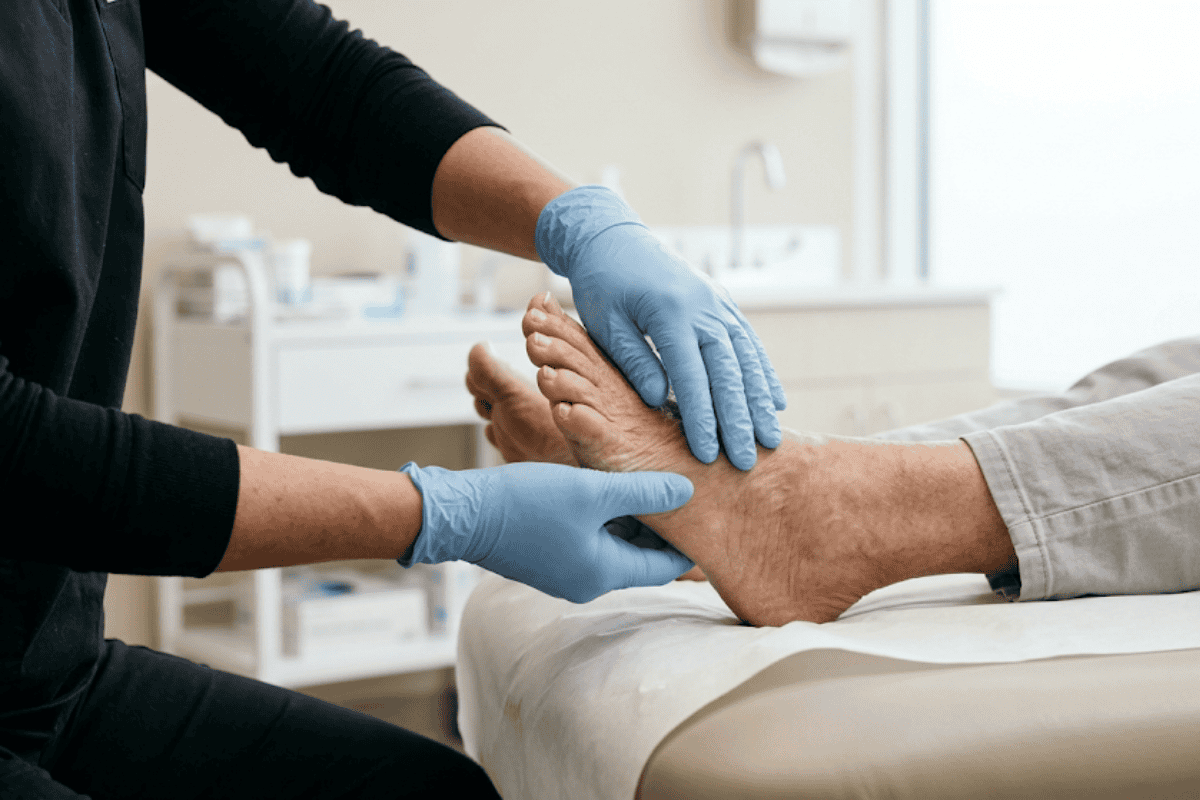
Routine professional exams and risk stratification. The foundation is a comprehensive foot exam that checks skin, nail health, circulation, and nerve sensation. Providers often use a simple monofilament test to see whether you can feel light touch, which reveals hidden neuropathy. As the MedlinePlus medical resource explains, this exam is designed to find problems early that could otherwise lead to serious infection or amputation. From those findings, your provider assigns a risk level, and that level decides how often you should be seen and how aggressively minor issues are managed.
Daily self-care between visits. What you do at home matters just as much as your visits. A daily inspection of the tops, soles, heels, and spaces between the toes catches redness, cuts, or swelling early. The NIDDK advises washing and drying feet carefully, moisturizing dry skin, and never going barefoot, even indoors. Managing blood sugar remains the single most powerful thing you can do to protect your nerves and circulation over the long term.
Footwear and offloading. Properly fitted shoes and clean, seamless socks reduce pressure points that create calluses and blisters. For higher-risk patients, therapeutic footwear or offloading devices spread pressure away from vulnerable spots.
Early intervention. When a callus, ingrown nail, or small wound appears, prompt professional treatment stops it from progressing. This is where medical-grade nail care and non-surgical wound care do their most important work.
A Simple Preventive Care Schedule
The table below shows how a typical prevention routine is spaced out. Every item here is also described in the surrounding text: daily self-inspection at home, regular professional nail and callus care, a comprehensive annual exam, and immediate attention for any new wound.
| Task | Frequency | Why It Matters |
|---|---|---|
| Self-inspection of both feet | Daily | Catches cuts, redness, and blisters before pain sets in |
| Wash, dry, and moisturize feet | Daily | Prevents cracked skin that can let infection in |
| Professional nail and callus care | Regularly, as advised | Reduces pressure points and ingrown-nail risk |
| Comprehensive foot exam | At least annually | Checks nerves and circulation to set your risk level |
| Attention for any new wound | Immediately | Stops small sores from becoming deep infections |
As the schedule shows, most of the work is simple and frequent. You inspect your feet daily and wash, dry, and moisturize them daily. You come in for professional nail and callus care on a regular basis, complete a comprehensive foot exam at least once a year, and treat any new wound immediately rather than waiting.
How Risk Levels Shape Your Plan
Not every patient needs the same schedule, and that is the point of risk stratification. Someone with normal sensation and good circulation may do well with an annual exam and steady daily habits. Someone with neuropathy, poor circulation, foot deformity, or a history of ulcers needs closer follow-up and often professional nail care they should never attempt at home. The American Diabetes Association emphasizes trimming nails carefully and avoiding barefoot walking, and for higher-risk patients those tasks are best handled by trained hands. Matching the intensity of care to your actual risk is what keeps a program both safe and sustainable.
Why Choose Winds of Change
Winds of Change is a non-surgical diabetic foot, wound, and nail care provider serving Muskogee, Ft. Gibson, Tulsa, Broken Arrow, and Okmulgee. Our preventive wellness program is designed to keep small issues small through routine exams, medical-grade nail care, and neuropathy care, all without surgery. We also help remove the barriers that keep people from consistent care by offering medical transportation and financing options, because a prevention plan only works if you can actually get to it. Our whole approach comes back to one promise: we keep you walking in health, because your mobility is your freedom.Call us today to start a plan built around your feet, your risk level, and your life in Muskogee, Oklahoma.
Conclusion
A preventive foot care program for diabetic patients is not complicated, but it is powerful. By combining daily self-care, regular professional exams, sensible footwear, and fast treatment of small problems, you can dramatically lower your risk of ulcers and amputation. The patients who do best are the ones who treat prevention as a routine, not an emergency. If you live in or near Muskogee, Oklahoma, Winds of Change is ready to help you build that routine and keep you moving with confidence.
Do not wait for a small problem to become a serious one. Reach out to Winds of Change and let our team put a preventive plan in place that protects your feet for the long run. Book Your Preventive Foot Care Appointment Today
Frequently Asked Questions
How often should a diabetic have their feet checked by a doctor?
Most people with diabetes should have a comprehensive foot exam at least once a year. If you have nerve damage, poor circulation, foot deformities, or a history of ulcers, your provider may recommend more frequent visits. Your feet should also be checked at routine diabetes appointments throughout the year.
What does a diabetic foot exam include?
A diabetic foot exam typically checks the skin and nails, blood flow, and nerve sensation in the feet. Providers often use a soft monofilament and other simple tests to see whether you can feel light touch and detect hidden neuropathy. The exam also looks for calluses, deformities, and any early signs of wounds.
How can diabetics prevent foot ulcers?
Diabetics can prevent foot ulcers by keeping blood sugar in a healthy range, inspecting their feet every day, and wearing well-fitted shoes and socks. Washing, drying, and moisturizing the feet helps prevent cracked skin, and never walking barefoot reduces the risk of unnoticed injuries. Treating any cut, blister, or callus promptly keeps small problems from becoming ulcers.
What are the early signs of diabetic foot problems?
Early signs include redness, swelling, warmth, cuts or blisters that are slow to heal, and changes in skin color or temperature. Numbness, tingling, or a burning feeling can signal nerve damage, while cramping in the legs may point to circulation problems. Any new sore or drainage should be evaluated quickly.
Can diabetic nerve damage in the feet be reversed?
Existing nerve damage from diabetes usually cannot be fully reversed, which is why prevention is so important. Keeping blood sugar well controlled can slow or stop further damage and help protect the nerves you still have. Managing symptoms and protecting the feet from injury remain the main goals once neuropathy is present.
Sorry, the comment form is closed at this time.