

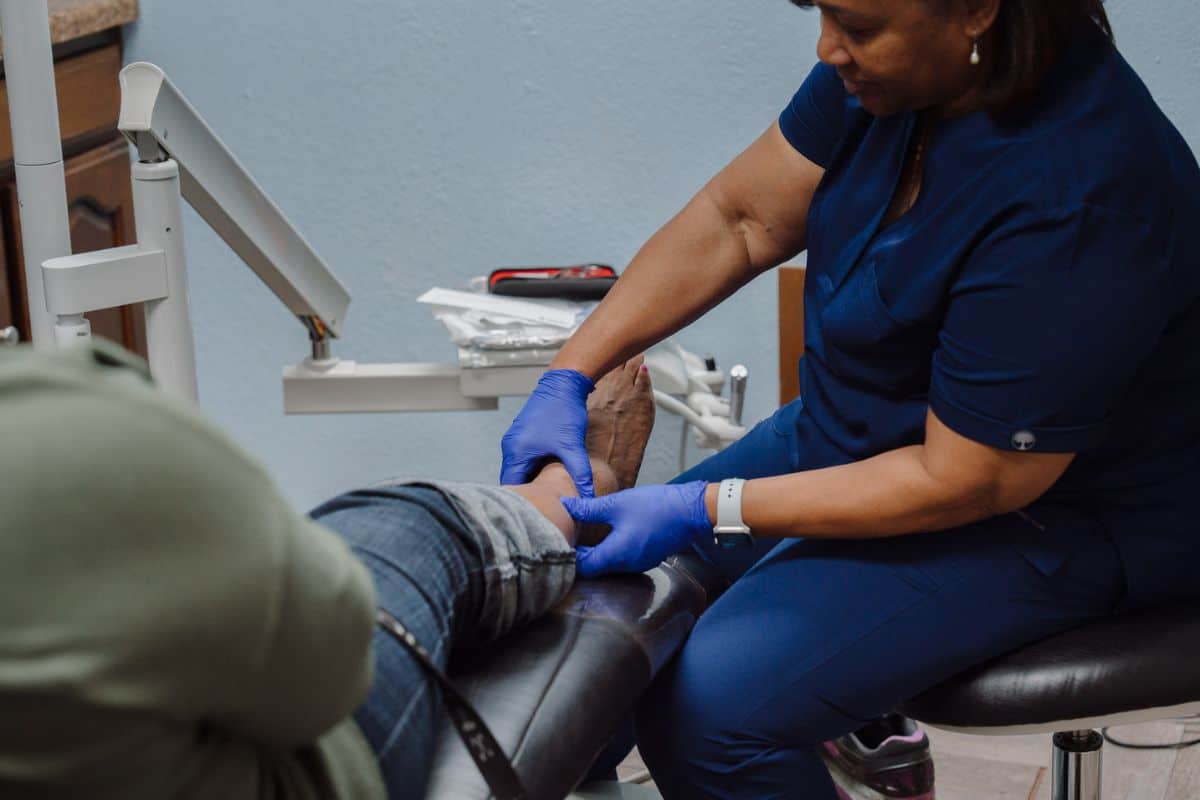
22 Apr Daily Foot Inspection Tips for Diabetics: A Step-by-Step Guide
Practicing daily foot inspection tips for diabetics is one of the single most powerful habits you can build to protect your long-term health. For people living with diabetes, the feet are often the first place where serious complications quietly take root and by the time symptoms become visible, the damage can already be significant.
Diabetes affects circulation and nerve function in ways that make even a tiny blister, cut, or callus a potential gateway to infection. Peripheral Neuropathy nerve damage caused by chronically elevated blood sugar means that many people with diabetes do not feel pain the way others do.
A wound that would send a non-diabetic rushing to urgent care might go completely unnoticed for days or even weeks. Combined with reduced blood flow to the extremities, this creates conditions where minor injuries escalate into ulcers, and ulcers, if left untreated, can lead to hospitalization or even amputation.
That is not meant to frighten you. That is meant to empower you. Because the beautiful truth is this: the overwhelming majority of diabetes-related foot amputations are preventable. The single most effective prevention tool available to you costs nothing and takes less than five minutes a day — a thorough, consistent foot inspection.
At Winds of Change, serving families throughout Muskogee, OK, and the surrounding region, we have walked alongside countless individuals as they navigate diabetic foot health. We have seen what early intervention and delayed action look like. This guide exists so you can always be in the first group.
If you have been searching for a podiatrist in Muskogee, OK or professional diabetic foot care nearby, Winds of Change is your trusted local resource for compassionate, expert-level foot care services.
What Happens to Your Feet When You Have Diabetes
Before we walk through the inspection process, it is worth understanding why your feet are so vulnerable. Diabetes creates two conditions that work against each other in damaging ways:
Peripheral Neuropathy occurs when high blood sugar damages the nerves, particularly the long nerves that run down to the feet. You may experience tingling, burning, or numbness. Over time, the numbness can become so profound that you lose the ability to detect pain, temperature, or pressure. This is dangerous because pain is your body’s alarm system. Without it, injuries go unnoticed.
Peripheral Arterial Disease (PAD) occurs when diabetes narrows the blood vessels that supply your feet and legs. Less blood flow means less oxygen delivery, slower wound healing, and a weakened immune response in the feet. A wound that a healthy person heals in a week may take a month for a person with diabetes — and during that time, infection can take hold.
Together, these two conditions create a perfect storm. Neuropathy removes the warning signal. PAD removes the healing ability. Daily inspection is the bridge that replaces both of those lost systems.
Daily Foot Inspection Tips for Diabetics: A Step-by-Step Guide
Do this inspection every single day — ideally at the same time, such as after your evening bath or before bed. Consistency is everything.
Step 1: Wash and Dry Your Feet First
Begin with clean feet. Use lukewarm water — not hot. Because Neuropathy can alter your perception of temperature, always test the water temperature with your elbow or a thermometer before stepping in. Wash gently with mild soap, then pat your feet completely dry, paying special attention to the spaces between your toes. Moisture trapped between the toes is a breeding ground for fungal infections.
Step 2: Find Good Lighting and a Comfortable Seat
Sit down in a well-lit area. Natural daylight or a bright lamp helps you catch subtle color changes and small wounds. If bending to examine your feet is difficult due to arthritis, back pain, or mobility limitations, use a long-handled mirror to see the bottom of your feet. Alternatively, ask a trusted family member to assist with your inspection.
Step 3: Inspect the Tops and Sides of Both Feet
Begin with the tops and sides of each foot. Look for:
- Any new cuts, scratches, or abrasions
- Redness, swelling, or warmth in any area
- Dry, cracked, or peeling skin
- Changes in skin color — particularly patches that appear unusually pale, blue, or dark
- Blisters or open sores
- Signs of ingrown toenails along the nail edges
Do not touch and assume — look carefully. Even areas that feel fine should be examined visually, because Neuropathy means “feel” is not reliable.
Step 4: Inspect the Soles and Heels
The bottom of your feet and your heels are the highest-pressure areas when you walk, making them particularly prone to calluses, pressure sores, and ulcers. Use your mirror here if needed. Pay special attention to:
- The ball of the foot and the heel are sites where ulcers most commonly develop
- Any hardened skin, corns, or calluses that have grown or changed
- Open sores or wounds, especially those that appear to have a dark center or unusual odor
- Cracking along the heels, which can allow bacteria to enter
Step 5: Examine Between Your Toes
Gently spread each toe apart and look at the skin between them. This moist area is frequently overlooked and problematic. You are looking for:
- Redness or raw skin between the toes
- White, macerated (soggy-looking) skin, which suggests a fungal infection
- Small cuts or sores that moisture has prevented from healing
- Any discharge or unusual odor
Step 6: Check Your Toenails
Your toenails deserve their own careful look. Examine each nail for:
- Unusual thickness or brittleness
- Discoloration — yellow, brown, or black can indicate fungal infection or injury
- Nails that are growing into the skin at the edges (ingrown toenails)
- Any debris collected under the nails
Cut your nails straight across — never curved — and file sharp edges gently. If your nails are very thick or if you have difficulty seeing or reaching your feet safely, let a podiatrist or trained professional handle nail care.
Step 7: Check Circulation Signals
While you are down there, take a moment to observe a few circulation cues. Feet that feel consistently cold, look pale or bluish, or have noticeably reduced hair growth on the lower legs may signal poor circulation. These are not emergencies in the moment, but they are important to mention to your healthcare provider at your next visit.
Step 8: Moisturize — But Not Between the Toes
Apply a good-quality, unscented moisturizer to the tops and bottoms of your feet after your inspection. Dry skin cracks easily, and cracks invite infection. The one exception: do not apply lotion between your toes, as excess moisture in that area promotes fungal growth.
Ready to take the next step toward healthier feet? Start with these daily foot inspection tips for diabetics and when you’re ready for hands-on support, contact Winds of Change today to schedule your personalized diabetic foot care consultation.
Warning Signs That Need Immediate Attention
Do not wait until your next scheduled appointment if you notice any of the following. Contact your healthcare provider or visit an urgent care clinic promptly:
- Any open wound, ulcer, or sore that is not healing within a day or two
- Redness, warmth, and swelling that suggest infection
- A wound with black tissue surrounding it — this may indicate gangrene
- Sudden severe pain or complete loss of sensation
- An unusual odor is coming from the foot
- Fever accompanied by foot pain or swelling
Building Habits That Protect Your Feet Every Day
The inspection itself is only part of the picture. What you do the rest of the day matters enormously, too. A few habits that pair beautifully with your daily inspection:
Never go barefoot. Even indoors, your floors hold hazards — splinters, sharp edges, dropped items. Diabetic slippers or diabetic shoes with protective soles are worth the investment. Keep a pair by your bed so your very first steps of the day are protected.
Wear socks designed for people with diabetes. Standard socks with tight elastic bands restrict circulation. Diabetic socks are seamless, non-binding, and moisture-wicking — a small change that makes a meaningful difference over time.
Inspect your shoes before putting them on. Each morning, reach into your shoes and feel for any objects, rough spots, or debris. A pebble in your shoe that a non-diabetic would feel in seconds might go undetected for an entire day in a neuropathic foot.
Stay active in ways appropriate for your health. Gentle movement — walking, swimming, seated exercises — keeps blood circulating to your feet. Avoid sitting with crossed legs for long periods, as this further restricts blood flow.
Manage your blood sugar. Ultimately, every complication discussed in this guide is driven or worsened by chronically elevated blood glucose. Daily foot inspection is the safety net; blood sugar management is the foundation.
Residents in and around Muskogee, OK looking for professional guidance on diabetic foot care whether from a podiatrist or a dedicated foot care specialist are encouraged to reach out to Winds of Change for personalized support tailored to your needs.
Why Choose Winds of Change
At Winds of Change, located in Muskogee, OK, we do not believe in one-size-fits-all care. Diabetic foot health is deeply personal — it intersects with your mobility, independence, livelihood, and quality of life. That is why we approach every client with an individualized, compassionate, and thoroughly informed perspective.
Our team understands the local community here in Muskogee. We understand the challenges our neighbors face in managing chronic conditions while balancing family, work, and the demands of daily life. We bring professional expertise to meet you exactly where you are.
When you choose Winds of Change, you receive:
- Personalized foot care assessments that go beyond a quick visual check
- Guidance on diabetic footwear, orthotics, and pressure-relief solutions tailored to your foot anatomy
- Education for both patients and family members on how to recognize and respond to early warning signs
- Coordination with your broader healthcare team to ensure nothing falls through the cracks
- A caring, judgment-free environment where you are always treated with dignity
Many residents across Muskogee, OK search for a podiatrist when they first notice foot problems related to diabetes. While Winds of Change specializes in professional foot care services, we are proud to serve as a trusted first step and ongoing partner for diabetic patients who need consistent, knowledgeable foot care right here in their community. You do not have to travel far or wait long to get the attentive foot care support you deserve.
Conclusion
Your feet are remarkable. They carry you through every single day of your life, bearing the full weight of your body with every step. For people living with diabetes, protecting those feet is a daily necessity that can mean the difference between a full, active life and a life compromised by preventable complications.
The daily foot inspection routine outlined in this guide is simple, free, and takes only a few minutes. But repeated consistently, it becomes one of the most powerful tools in your diabetes management arsenal. It transforms you from someone who reacts to foot problems into someone who prevents them.
You do not have to navigate diabetic foot care alone. The team at Winds of Change in Muskogee, OK, is here to support you at every step of the journey — from learning the basics of daily inspection to receiving advanced professional foot care when you need it most.
Don’t wait for a problem to find us. Whether you searched for a podiatrist in Muskogee, OK or foot care in Muskogee, Oklahoma — Winds of Change is here and ready to help. Contact us today and let’s keep you on your feet for years to come.
Frequently Asked Questions
1. How often should someone with diabetes inspect their feet?
Every single day. Diabetic foot complications can develop very quickly, especially in people with Neuropathy or poor circulation. A daily inspection — even on days when your feet feel fine — is the only way to catch problems before they become serious.
2. What if I cannot see the bottom of my feet clearly?
Use a long-handled mirror placed on the floor, which lets you angle it to see the soles and heels without bending. Alternatively, ask a family member or caregiver to assist with your inspection. Some people also find it helpful to take a photo with their phone to examine areas that are hard to see directly.
3. What is the difference between a callus and a diabetic foot ulcer?
A callus is a thickened, hardened patch of skin that develops in response to repeated pressure or friction. While calluses themselves are not wounds, they can hide pressure sores developing underneath them and should be monitored. A diabetic foot ulcer is an open sore or wound that often appears as a red, raw, or darkened area of the skin. Any open wound in a person with diabetes requires prompt medical attention.
4. Can I cut my own toenails if I have diabetes?
Many people with diabetes can safely trim their own nails if they have good vision, adequate dexterity, no significant neuropathy, and healthy nails that are not thickened or deformed. The key rules are to cut straight across, never round the corners, and never cut the nails too short. If you have any doubt or if your nails are thick, discolored, or difficult to manage, it is safer to have a podiatrist or trained professional handle nail care to avoid accidental injury.
5. Is Winds of Change a podiatrist office in Muskogee, OK?
Winds of Change is a professional foot care service based in Muskogee, OK. While we are not a podiatry clinic, we provide dedicated diabetic foot care services and work alongside your broader healthcare team — including podiatrists — to help you maintain optimal foot health. If you have been searching for foot care support near Muskogee, we are here to help.
Sorry, the comment form is closed at this time.